Solinco Whiteout 305 18x20 Camo V2 Review
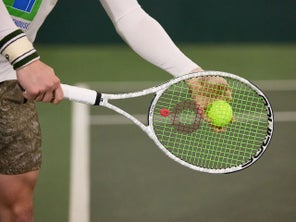
Along with the rest of the Solinco Whiteout family of racquets, the Whiteout 305 18x20 v2 Camo has been updated with Arch-2 construction, which softens up the frame without compromising its overall feel. While the 66 RA of the frame remains the same, our team found a much more cushioned hitting experience compared to its predecessor. Otherwise, the specs of the racquet remain largely unchanged, with its 98-square-inch head size, 18x20 string pattern, 21.7-mm box beam and 305-gram (10.6-ounce) unstrung weight. Our team was seriously impressed by this subtle update, reveling in the Whiteout 305 18x20 v2's excellent feel and high levels of control. Good feel during impact was a consensus among the testers, and they noted the racquet's great touch as well. Even with a denser 18x20 string pattern, this racquet packed a surprising amount of spin, although perhaps not as much as its 16x19 or extended-length siblings. This Whiteout 305 18x20 v2 also dazzled at net, with every tester appreciating the feel during doubles and net play. For players looking for a stable, control-oriented experience in a user-friendly package, the Solinco Whiteout 305 18x20 v2 Camo offers tempting upsides across the board.
-Excellent control
-Good feel
-A tad low on power for some
Final Verdict
Breakdown
Groundstrokes: 8.6
To nobody's surprise, groundstrokes with the Whiteout 305 18x20 v2 Camo felt consistent, precise and stable. Our playtesters noted excellent feel during impact and enjoyed how much they were able to trust their baseline play. The Whiteout 305 18x20 v2 provided Chris with plenty of control and enough spin to shape his shots with venomous intent. He said, "The Whiteout 305 18x20 v2 offers lots of control on every shot. I liked the feel at impact. I felt connected to my shots, and the response felt smooth. This racquet felt great on my slice backhand. I was able to generate lots of slice, and I felt even more in control of that shot. The 18x20 stringbed also felt like a good match for my topspin backhand. I don't hit a ton of spin on that shot, and the dense string pattern added a lot of depth and directional control for me. The Whiteout 305 18x20 v2 has so much control that I prefer it strung lower to open up its power potential a bit. Strung with something like Solinco Hyper-G, I'd be in the 46- to 48-pound tension range."
"I also felt very in control of the depth I was generating, which encouraged me to stay on the gas and be aggressive during points."
Although Troy is partial to the extended version of this frame, he found lots to love about how this standard-length option played, but he noted he would likely customize it slightly to bring out its true potential for him. He explained, "I had some good feelings about this racquet because I really love its longer sibling, the XTD version, which has been basically my racquet of choice the past couple of months. It's not like this racquet has a low swingweight, but since I use the extended-length version and the Yonex EZONE 98+, I found swinging this standard version relatively easy. Besides that, I also noticed a firmer feel on contact compared to what I was getting with the XTD. I still got great control when taking big swings on my forehands, but the feel was just a bit crisper. The XTD version of this 18x20 felt plusher, and I also felt like it pocketed the ball a bit better on my groundstrokes. I had good control and bite on the ball when I was hitting my backhand slice with the Whiteout 305 18x20 v2, but I felt like I was left wanting just a bit more mass and plow through to help carry the ball deep and to help redirect the ball when facing big hitting opponents."

Oak also has an affinity for the extended-length variant of this racquet, and as such he was surprised to find he enjoyed this standard-length version even more. He said, "As shocked as I am to admit this, I think I actually slightly preferred this standard-length Whiteout 18x20 v2 to its extended-length counterpart. For me, the slightly softer feel of the Arch-2 construction (compared to the v1 layup) works better in standard-length frames, which I found to be true for the new Blackouts as well. Don't get me wrong, they're still great frames, but I like having some additional stiffness to rein in the dwell time even when the ball is just a half-inch away from my contact zone. When the ball is closer to me contact-wise, it feels easier to take advantage of the deeper pocketing to hit a shot with a lot of shape to it, as opposed to relying on the stiffness of the frame to supply both feel and power. I enjoyed this Whiteout 305 18x20 v2 for the most part on my groundstrokes, primarily hitting flat balls off either wing. I struggled a bit with depth and power, but I found good reliability from the racquet elsewhere. I probably would've appreciated this frame a tad more if the balance was a bit more head light, and if the swingweight was closer to 320 instead of being in the mid-320s."
Mark primarily found a precise nature from the Whiteout 305 18x20 v2, which let him comfortably go after smaller targets to make the most of his counterpunching game. He said, "I felt precise and in charge of my groundstrokes with Solinco's Whiteout 305 18x20 v2. Groundstroke depth was easy to manage, as was directional control, and I was able to reliably aim shots from either wing to small targets. Compared to many racquets I have tested from the backcourt, the Whiteout 305 18x20 v2 Camo performed like a scalpel with power. The density of the 18x20 pattern is more open than an 18-main Head Prestige but a little tighter than a Head Speed Pro or Prince Textreme Tour 100P. The result was easy access to spin whether I was carving under or over the ball from the baseline, all while maintaining its point-and-shoot quality."
Volleys: 8.7
The Whiteout 305 18x20 v2 Camo continued to shine at net, earning high marks from all the testers and letting them volley with precision and confidence. Mark found the racquet's inherent precision on the baseline to seamlessly transition to his net play. He noted, "That 'scalpel with power' effect I got from the backcourt was just as prevalent and helpful inside the service line. Fishing out dipping passing shots was probably my favorite volley to hit with the update to the Whiteout 305 18x20, but I was just as successful replying to softer touch or half volleys, not to mention volleys that I was trying to put away."
Oak loved volleying with this Whiteout 305 18x20 v2, whether he was building the point over time or ending it quickly. He explained, "Volleys were an area where I found the Whiteout 305 18x20 v2 to be really obedient. There's great precision, quick handling for fast encounters and enough stability to absorb heavier pace. I found the feel to be responsive and cushioned without being 'mushy,' which is an important distinction. I was able to hit a variety of volleys with confidence, reveling in the racquet's ability to drop balls short in the forecourt or to stick volleys deep nearer the baseline."

Chris was also impressed by the Whiteout 305 18x20 v2 Camo’s feel and performance on volleys, and he could keep his opponents under constant pressure whenever he came forward. He said, "I loved the feel of this racquet at net. I had a connected sense to the ball on my touch shots, and I think there was a big improvement to the feel compared to the previous model. The Whiteout 305 18x20 v2 felt very comfortable. Again, control was great, and I felt confident aiming for the corners. I liked the overall balance and weight of the racquet at net and found it to feel very natural in my hands."
Troy leaned into the Whiteout 305 18x20 v2's connected nature to volley with consistent depth and authority. He described, "When it came to volleys, this racquet felt crisp and quick in the hand, and my shots were very predictable. There was decent stability when facing hard-hit shots, so when the ball was ripped hard at me, like when it was coming from Michelle's forehand, I was able to redirect the pace relatively easily. The 18x20 string pattern helped me feel more connected to the ball when I was hitting touch shots. This was something that I felt was a big benefit compared to the 16x19 version of the Whiteout 305 v2. If I were to make any changes to this racquet, I would make it more head light by adding some weight to the handle, and I would drop the tension a little bit lower with a full bed of poly, like around 47 pounds compared to our usual 52 pounds for the playtests, just to give it a little more pocketing and a slightly softer feel on contact."
Serves: 8.3
Our playtest team found the Whiteout 305 18x20 v2 to be reliably precise on serve, although perhaps not as powerful as some of the other racquets in the Whiteout family or other frames with similar spec profiles. For Troy, the standouts on serve proved to be control and consistency, but he missed being able to smack flat first serves like he does with the XTD 18x20. He said, "Overall I was happy with the precision and the easy maneuverability I was getting on my serves. The high level of control that this racquet possesses allowed me to be very consistent and place my serves well within the service box. I wasn't getting a ton of bite on the ball like I did with the Whiteout 305 v2 16x19, which helped with net clearance and shaping my kick serves. With that said, this 18x20 version still felt fast and precise, and my spin serves were coming off the racquet with good pace and heaviness. I could hit my flat serve with precision, although the XTD version of this Whiteout 305 18x20 v2 was just a bit better, giving me that slight extra boost of power while retaining great accuracy."
The Whiteout 305 18x20 v2's control and spin allowed Chris to place and shape his serves with ease. He said, "Control and spin were the standouts for me on serve with the Whiteout 305 18x20 v2. I definitely got more pace on my serves with the XTD version of this racquet, but I was still getting enough pop to get the job done. My first serve was very consistent, and when I did hit a second serve, I wasn't taking any pace off since I felt very confident with this racquet."
Similar to Troy, Oak found himself missing the additional leverage of the extended version of this racquet, but he noted above-average consistency. He explained, "Serving was definitely an area where I missed the extra half inch of the XTD 18x20, but I still appreciated what I could do with this racquet. I found myself wanting a little more spin to give shots more shape and movement, but the overall reliability was sufficient for me. Power was decent, control was above average and placement on the whole felt very reliable. I was mostly confident hitting serves, but I wasn't going for anything too wild or heavy. I liked going for flat serves and slice serves primarily up the T in the ad court or out wide in the deuce court.”
Mark found that he could hit his serving targets reliably and consistently with the Whiteout 305 18x20 v2. He said, "The spots I am most confident aiming serves to are at the body on both courts and out wide to the ad side. That didn’t change, but my percentages did improve serving with this Whiteout 305 18x20 v2. The spin on my serve was good, but my targeting and consistency was even better. Admittedly, directional control from the baseline was a little easier, but I have to say that I felt more in command serving with this racquet than with any other in recent memory."
Returns: 8.1
Returns with the Whiteout 305 18x20 v2 went over well with our team for the most part, highlighted once again by the racquet's reliably precise nature for spot targeting. The Whiteout 305 18x20 v2 encouraged Mark to hone his returns. He explained, "Like most players, there is always a portion of your game you would like to improve, and for me, it is the return of serve, particularly on the forehand side. I have been focusing more on refining that shot lately, and the neutrality (plus a little power) of the Whiteout 305 18x20 v2 allowed, or almost forced, me to swing more aggressively and take the high road over the top of the ball instead of slicing my return."
Oak also found the Whiteout 305 18x20 v2 reliable on his returns, but this was an area where the racquet's lower-powered nature didn't always work for him. He said, "Returns were fairly average for me with the Whiteout 305 18x20 v2. Control was good overall, but power was a tad low. I tried to keep my returns simple and deep with this racquet, looking to power through the alley or up the middle most often, which wasn't always easy. Going cross court proved a little harder, which made doubles with this racquet trickier. I think adding Solinco's weight module to the handle to shift the balance would make this Whiteout 305 18x20 v2 much more viable for me on the whole, and the extra mass would increase the power though the ball. Nonetheless, the Whiteout 305 18x20 v2 felt stable throughout contact, if a bit underpowered."

Out of all the testers, it seemed like Chris had the best experience returning serves with the Whiteout 305 18x20 v2, and he confidently stepped in and attacked consistently. He described, "It was fun stepping in and driving returns with the Whiteout 305 18x20 v2. I was taking a good crack at the ball, and I was happy to go either down the line or cross court. As from other areas of the court, I was very happy with the control I found, and I was striking the ball confidently. I also had good success using the racquet's mass to block the ball back on more defensive returns. On block returns, the level of control continued to be top notch."
Troy found a great maneuverability-to-control ratio, which let him choose his targets without feeling pressed for time. He said, “The Whiteout 305 18x20 v2's control and maneuverability worked well for me when hitting serve returns. I felt like I had easy maneuverability when I needed it, especially when I was stretched out in a defensive position and needed to hit a little flick shot. Whenever I had a good look at a serve that was in my wheelhouse, this Whiteout 305 18x20 v2 let me take big rips at the ball and maintain control and depth on my shots. The stability was pretty good for a 305-gram unstrung racquet, but what I felt was lacking at times was that overall plow through on the ball, especially against big hitters. The XTD version gives me that easy plow through, but I think this standard-length version of the Whiteout 305 18x20 v2 could use a little more mass behind the ball. Some tail weight is what I think it mostly needs, but maybe just a bit at 3 and 9 o'clock in the hoop as well."
Breakdown Summary
| Groundstrokes | 8.6 |
| Volleys | 8.7 |
| Serves | 8.3 |
| Returns | 8.1 |
| Power | 7.8 |
| Control | 8.9 |
| Maneuverability | 8.6 |
| Stability | 8.3 |
| Comfort | 8.1 |
| Touch / Feel | 8.4 |
| Topspin | 8 |
| Slice | 8.3 |
Final Verdict |
8.4 |
Tech Specs
| Length | 27 in |
| Head Size | 98 sq in |
| Weight | 11.4 oz |
| Balance Point | 13 in |
| Construction | 21.7mm / 21.7mm / 21.7mm |
| String Pattern | 18 x 20 |
| Length | 68.58 cm |
| Head Size | 632.26 sq cm |
| Weight | 323 g |
| Balance Point | 33.02 cm |
| Construction | 21.7mm / 21.7mm / 21.7mm |
| String Pattern | 18 x 20 |
Tennis Warehouse University Lab Data
| Score | Grade | |
| Flex Rating Test | 66 | MED |
| Swing Weight | 326 | MED |
Playtester Thoughts

Chris
The Whiteout 305 18x20 v2 is another solid update from Solinco, with better feel and control compared to the first version. I would demo it against the Babolat Pure Strike 98 18x20, Head Radical Tour and Tecnifibre TFight 305S. All offer a ton of control, and I think it would come down to which feel you prefer because they all differ in that regard.
Tons of control and great feel. This is a very confidence-inspiring racquet.
A smidge down on power and launch compared to the XTD and 16x19 versions, but that is fixable by going with a lower string tension.
| Chris's Breakdown | |
| Groundstrokes | 8.6 |
| Volleys | 8.6 |
| Serves | 8.5 |
| Returns | 8.6 |
| Power | 8.3 |
| Control | 9 |
| Maneuverability | 8.3 |
| Stability | 8.5 |
| Comfort | 8.5 |
| Touch / Feel | 8.5 |
| Topspin | 8.5 |
| Slice | 8.7 |
| Overall | 8.6 |

Troy
The Tecnifibre TF40 305 18x20 is similar, but this Solinco Whiteout 305 18x20 v2 feels a bit firmer. I would also compare this racquet to the Babolat Pure Strike 98 18x20, but I found a bit more feel for the ball with this Whiteout 305 18x20 v2, and I could execute the touch shots a bit better.
The control is great with this Whiteout 305 18x20 v2, and for an 18x20, this racquet has some nice pop and pretty good access to spin.
Just about everything the Whiteout 305 18x20 v2 does, I find the XTD version to do just a bit better. If I am being picky, I would add some weight to the handle to achieve a more head-light feel to the racquet, and I would drop tension slightly with a full bed of poly because this version feels a bit firmer than the XTD model.
| Troy's Breakdown | |
| Groundstrokes | 8.4 |
| Volleys | 8.5 |
| Serves | 8 |
| Returns | 8.2 |
| Power | 7 |
| Control | 9.2 |
| Maneuverability | 8.8 |
| Stability | 8.4 |
| Comfort | 7.5 |
| Touch / Feel | 8.5 |
| Topspin | 7.7 |
| Slice | 8.6 |
| Overall | 8.3 |

Mark
The Tecnifibre TF40 305g (18x20) probably comes the closest overall. Wilson's Blade 98 18x20 v9 is a little softer and the Babolat Pure Strike 98 18x20 feels a bit firmer at impact of the ball, but their performance overall is pretty comparable. Although Dunlop's CX 200 (18x20) Limited Edition features a lower swingweight, the other specs line up with the Whiteout 305 18x20 v2.
I already claim the Whiteout 305 18x20 XTD as one of my all-time favorite racquets, so the new Whiteout 305 18x20 v2 was an easy transition. Whether I was playing doubles or singles, the power, consistency and spin were pretty much the same with either frame. And although my serve and return are not the strongest parts of my game, I did feel that both shots improved during this playtest.
I really wish I had a knock on the Whiteout 305 18x20 v2! I usually mention that a little extra length would improve performance, but Solinco already covered that with the XTD.
| Mark's Breakdown | |
| Groundstrokes | 8.5 |
| Volleys | 8.5 |
| Serves | 8 |
| Returns | 7.5 |
| Power | 7.5 |
| Control | 8.5 |
| Maneuverability | 8.5 |
| Stability | 8 |
| Comfort | 8 |
| Touch / Feel | 8 |
| Topspin | 8 |
| Slice | 8 |
| Overall | 8.4 |

Oak
Out of the 305-gram, 18x20, constant beam geometries out there, the most obvious comparison is the TF40 305 18x20 with foam on the inside as well, making the impact more solid and stable throughout contact. Elsewhere, frames like the Wilson Blade 98 18x20 v9 and the Dunlop CX 200 (18x20) Limited Edition are quite similar, but they have respectively higher and lower swingweights. I'd say I prefer this Whiteout to the frames listed above, with the exception of the TF40, which has a slightly thicker beam for increased power. I definitely prefer this v2 update to the v1 of the frame, which was the opposite of my experience with the extended version. Also, compared to the extended variant of this frame, I personally liked this racquet more, but I think the extended racquet is a better frame overall.
I really like how much control this racquet has, and the overall feel of the Arch-2 construction is quite nice in a standard-length racquet.
Lower on the power spectrum, a bit too head-heavy for me.
| Oak's Breakdown | |
| Groundstrokes | 8.8 |
| Volleys | 9.1 |
| Serves | 8.7 |
| Returns | 8.2 |
| Power | 8.3 |
| Control | 9 |
| Maneuverability | 8.7 |
| Stability | 8.2 |
| Comfort | 8.4 |
| Touch / Feel | 8.6 |
| Topspin | 7.8 |
| Slice | 8 |
| Overall | 8.4 |