Tecnifibre Racquet Guide
The solid and stable feel of most Tecnifibre frames is in part likely owed to the foam-filled interior they choose to implement in most of their frames. There are three main Tecnifibre families, their performance flagship silo in the TFight line, a control-focused family with the TF40s, and a power franchise in the new Fire racquets.
TFight: The Best of All Worlds
The TFight family is one that optimizes itself to be a truly well-rounded racquet, sitting ideally in that realm of controllable power that allows for most players to feel comfortable teeing off on balls or going after smaller targets. Though the TFights feature rounded beam geometry designed for more modern topspin mechanics and contemporary swing paths, they also utilize a constant beam width of 22.5 mm from tip to handle, which helps makes the racquets feel more uniform in terms of their response. Let’s take a look at each individual model.
TFight 305s
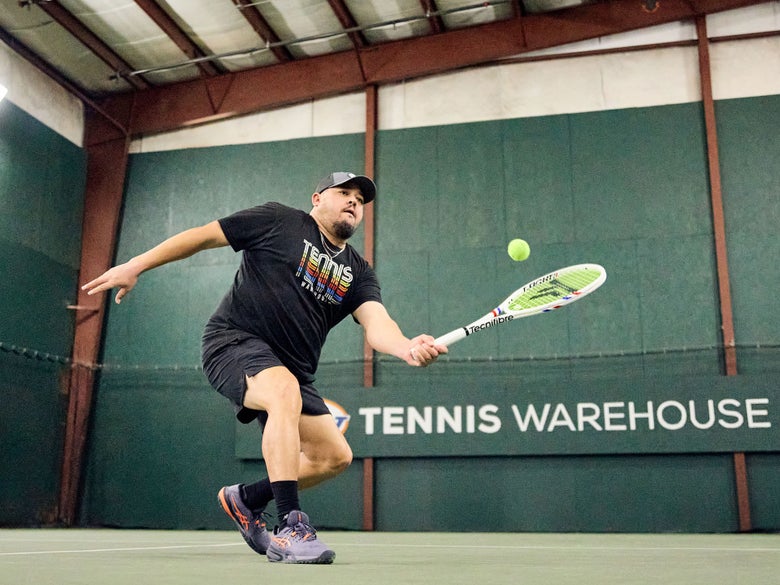
The TFight 305s was one of the highest rated racquets at Tennis Warehouse in 2025, earning praise for its increased maneuverability and rock-solid stability. The racquet sports an unusual 18x19 string pattern, which provides good directional control but is still open enough for ample spin production. Our team was thoroughly impressed with this latest version of an already beloved frame, highlighting its all-around nature and little bits of extra magic that seemed to make their best shots even more impactful. The frame also garnered praise for its precise nature, and also encouraged our team to lean into their respective playing styles. Our net-rushers enjoyed the stable and reliable precision on their volleys, and our more all-court players felt like they could trust this racquet from anywhere on the court. The 305s has quickly earned favor across a variety of levels, but advanced players in particular craving versatility in a slightly denser string bed will want to demo this one for sure.
TFight 300s

Officially endorsed by Iga Swiatek, the TFight 300s has a lighter weight and more open string pattern compared to its more demanding sibling the 305s. This speedy racquet is well-balance across the board, and seems to perfectly straddle that line between control and power. This frame is ideal for those who are more comfortable with the precision of a 98 square-inch hoop, but also want something a little less demanding than the more common 305 gram weight at that head size. The racquet’s biggest upside per our testing team was its outstanding maneuverability, which proved to be a uniting theme across this most recent TFight family as a whole. But it’s easy to see why Swiatek likes this frame. Heavy topspin drives can be easily whipped up from anywhere on court, and the racquet slices through the air so quickly which helps make any shot feel more within reach.
TFight 300

Perhaps the true hidden gem of this TFight family though is its newest member in the standard 300. Like the 300s, this racquet uses a familiar set of baseline specs with its 300-gram unstrung weight and 16x19 string pattern. But the TFight 300 has a 100 square-inch head size and features the lowest swingweight among the standard range at under 320 strung. This extremely fast yet stable racquet received good reviews from our playtest team, and even impressed Chris so much that it is his racquet of choice still to this date. He cites the combination of touch and power that the racquet gives him that helps to make it such a natural fit for his game. For fans of speedy 100 square-inch hoops with a solid impact sensation to boot, this TFight 300 is sure to delight.
TFight 315s

On the other end of the weight spectrum is the heaviest TFight in line currently, coming in at 315 grams unstrung and asking a little more of its users. Helping to make this racquet more wieldable is a relatively more headlight balance at around 7 points when strung. This hefty stick is more than capable of rifling off heavy baseline blows, and our testers reported having a great time with it when really going after their shots. The TFight 315s feels rock-solid too, which helped our team volley with confidence and absorb pace easily from any area of the court. The updated geometry seemed to offer some more free power and the now lower RA or flex rating made this a more comfortable experience overall compared to the prior version of this frame. For advanced players craving some more mass-based power in stock form, this 315s offers a fast-swinging and reliable experience.
TFight 285/270
Rounding out the line are the lighter weight TFights, coming in at 285 and 270 grams unstrung, with both racquets sporting the same hoop size and string pattern as the TFight 300 with a 100 square-inch hoop and a 16x19 string pattern. The beams measured a smidge thicker at a constant 23mm, compared to the 22.5 mm on the other more advanced TFights. These are not only great platform frames but excellent racquets to grow over time with younger, developing players.
The Fire and its Firepower
The Fire series is Tecnifibre’s overhaul to their previously existing power/comfort franchise in the TF-X1. Now armed with a new mold and internals, the Fire is here to assert Tecnifibre in crowded power racquet landscape. Compared to the TF40 and TFight families, the Fire has a comparatively higher stiffness, but make no mistake, these racquets are plenty comfortable thanks to two key design choices made. One being their of course usage of foam inside the racquet itself, which helps absorb vibrations sourced during impact. The other comfort-oriented internal choice is Tecnifibre’s “X-Damp” system, which is primarily utilized throughout the handle and pallet to filter out even more vibrations. There are a couple models to be aware of within this family.
Fire 305s

The Fire 305s is the most advanced option within the family, with the smallest head size at 98 square-inches, the heaviest weight at 305 grams, and featuring a string pattern of 16x19 for easy spin production. The Fire 305s offered excellent power and spin access, letting our team swing out freely and go after their shots comfortably. A standout area of performance proved to be this racquet on serves, offering up some increased pace production and surprisingly reliable delivery on flat firsts. For advanced level players looking for one of the more powerful 98s out there, this Fire 305s is a worthy addition to any demo list.
Fire 300

The Fire 300 is a speedier and more forgiving option compared to the 305s with its 100 square-inch hoop. This 300-gram, 16x19 string pattern frame is highlighted by its maneuverability and its power above all else. Anytime a racquet swings this quickly the question of stability is brought up and for the most part the racquet was fairly stable, though some individual customizations could be made with weight additions and unique string setups. Our team found this to be a good alternative to racquets like the Pure Aero, the FX 500, and the Extreme MP. All frames are inherently powerful and relatively spin-friendly. If you like those frames but are maybe looking for something with a more solid feel and maybe some more comfort, the Fire 300 is an excellent alternative.
The Other Fires: 285, 270, and 260 OS
For beginners and developing players, the Fire family offers some lighter weight 100 square-inch options that would make for good platforms as well as frames to develop one’s game with over time. These lighter weight options feature a more head-heavy balance and a lower swingweight, giving them easy handling but also more plow through the end of the swing for increased stability. Additionally, there is a true oversize option in the Fire 260 OS with its 110 square-inch hoop, offering both increased power and forgiveness. Our playtest team actually had an amazingly favorable experience with the Fire 260 OS in initial testing, noting its surprising playability given its oversized nature.
TF40: Confident Control
The TF40 silo is known for its more traditional approach and emphasis in terms of its frame design. All of its models sport the same 98 square-inch hoop with a 22mm constant box beam geometry. These racquets vary in weight and string patterns, so let’s delve into what makes each one great.
TF40 305 16x19

The TF40 305 16x19 is in many ways analogous to something like a Wilson Blade 98 16x19, Babolat Pure Strike 16x19, or a Solinco Whiteout 305 16x19. These frames all use the same approach to control in terms of their geometry, but they differ in terms of their overall feel. The closest comparison feel-wise would likely be the Whiteout from Solinco, as it also has that rarer foam-filled interior. Compared to the Whiteout, the TF40 swings faster at an average swingweight near 320 when strung and is relatively head-heavier at 3 points headlight when strung. Our team found this racquet to pocket the ball on contact exceptionally well, and to offer a very connected feeling to one’s shot. For fans of the Tecnifibre feel and maneuverability, this is an excellent place to start.
TF40 305 18x20
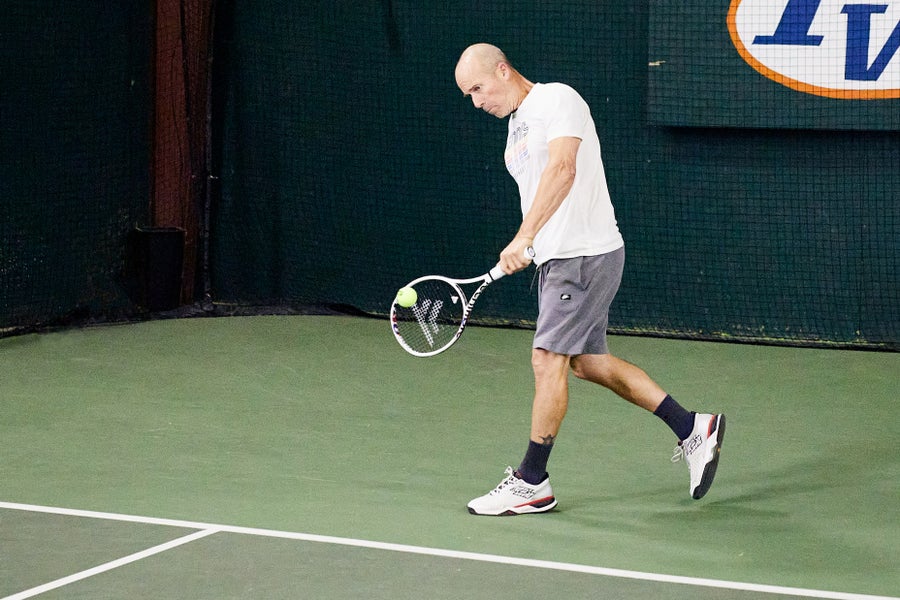
And if you’re a fan of patterns that boost your directional control even more so, the TF40 305 18x20 answers that particular challenge. This racquet’s swingweight hovers closer to 330 when strung, asking a little more of the user and providing increased stability when driving through the shot. Denser patterns will typically provide a faster rebound rate, meaning that the ball will not sink as deeply into the strings during contact. The result typically is some increased directional control which helps when picking smaller targets to go after. This racquet is highly comparable to Solinco’s Whiteout 305 18x20 v2Camo, and should also be demoed alongside racquets like the Wilson Blade 98 18x20 v10, the Babolat Pure Strike 18x20, the Head Radical Tour, the Prince Tour 100P 2026, and the Dunlop CX 200 18x20.
TF40 315 16x19
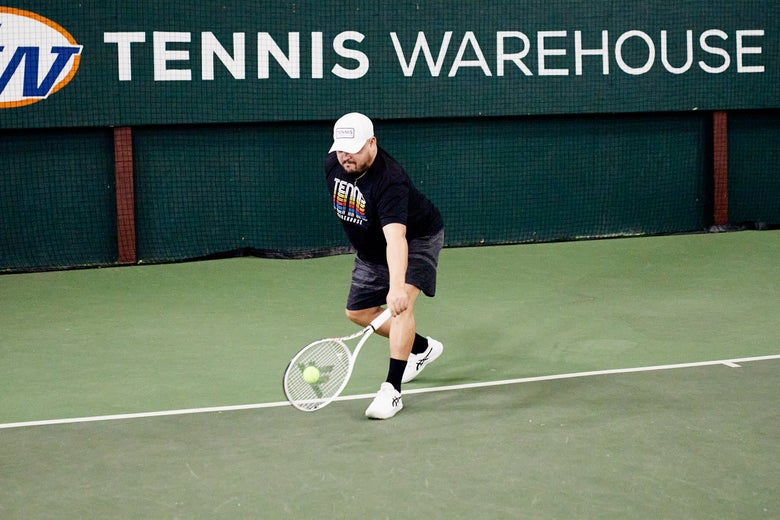
If you’re interested in heavier control frames more in the players’ realm of racquets, the TF40 line has you covered with its 315-gram unstrung TF40 315. This somewhat demanding frame thankfully has a much more wieldable 8 points strung headlight balance and a lower flex of 63 when strung. Featuring a sub-320 swingweight on average, this racquet is surprisingly maneuverable given its heavier weight. This racquet is probably the most demanding and traditional-feeling offering currently from Tecnifibre, so if you’re a fan of that classic feeling and style (calling all one-handed backhands), this heavier TF40 is an excellent choice that is more than up to the demands of the modern game.
TF40 290 16x19

And if you’re on the opposite end of the spectrum weight-wise, the TF40 has a sub-300 gram option that offers easy handling and a great platform for customizing up to a desired spec. Our team found this one to be surprisingly playable in stock form, noting it as an excellent control option for players who maybe want a lighter stock weight to work with. Impressive too was the racquet’s stability given the lower weight.