Best ProKennex Racquet for Me
While ProKennex's racquet families do specialize more intentionally within each silo, the overarching theme remains their signature arm-friendliness. Internally, all of their frames sport ProKennex’s signature movable mass implementation, which not only helps mitigate harsher vibrations sourced from impact, but, also gives the racquets a unique boost of momentum. These moving particles contribute to a more stable experience through the swing itself, and provide a slight uptick in power as well.
ProKennex Classics
While many manufacturers will retire their legacy models over time, ProKennex has opted to keep some of their classic frames in-line, giving longstanding fans of the heritage experience something to latch onto.


Kinetic Pro 5G Classic
The Kinetic Pro 5G Classic is about as traditional as it gets for “modern” frames with its 100 square-inch head, 16x20 string pattern, and 315 gram unstrung weight. While 315 grams is a bit of a dying breed for contemporary frames as far as weight goes, the Pro 5G Classic is an anomaly with its sub-320 swingweight and 8 points headlight balance when strung. This makes it highly maneuverable despite its heftier weight, which helps the racquet give its wielders an ideal blend of mass-based power and speed-oriented handling, with less of the weight at the racquet’s tip for increased acceleration throughout the shot. Besides the movable mass, there are not too many bells and whistles used in this frame’s construction, which gives it more of that raw, ultra-connected feeling that many advanced level players crave. This racquet has been one of the most popular releases ever from ProKennex, and the fact that it is still available just goes to show that if something ain’t broke, then why not keep selling it?
Kinetic Pro 7G Classic
In addition to its beloved Pro 5G Classic, ProKennex offers a 7G Pro, which is a nearly identical frame, except for the fact that the 7G Pro is extended in length at 27.5”. Further differentiating the 7G Pro from the Pro 5G Classic is its 330 on average strung swingweight. Otherwise, its 100 square-inch head size, 16x20 string pattern, and 22mm constant beam are virtually the same. While the 5G is maneuverable for its weight and class, the 7G is certainly more demanding, though the upsides are potentially worth the tradeoff. For players looking for some extra reach, power, and leverage, the 7G offers just that, in addition to all of the aforementioned benefits of the Pro 5G. There are not too many extended length frames in the ‘tweener/player realm with this strong of an emphasis on comfort.
The Ki Family


The Ki 5
The Ki 5 is a bit of a puzzle, but the specs would position it as the most well-rounded option within the family across the largest variety of players. The racquet comes in at 295 grams unstrung and features a constant beam taper of 22 mm from tip to throat. Additionally the racquet sports a 100 square-inch headsize and a 16x20 string pattern, which provides good power with a smidge more control from the slightly denser string pattern. Counteracting its slightly lower weight is a higher balance, coming in on average around 33.48 cm when strung. This weight distribution allows for increased swingweight without increased mass, allowing for more plow through in a more accessible experience. The Ki 5 makes for a good platform frame as well, letting users customize up to a more standard spec range. For players using a head-heavier setup, this is a great option for more heft through the end of the racquet.
The Ki 10
The profile of the Ki 10 might look a little similar to fans of the Babolat Pure Drive. Indeed the original Pure Drive was based off an older ProKennex design with a very similar beam shape. The Ki 10 differs from the Pure Drive though in the sense that it has a constant beam geometry compared to a shifting taper. This racquet also features a fairly higher swingweight compared to a lot of racquets within its spec range, so for fans of increased stability and a more head-heavy experience, this Ki 10 is a great option. The spin-friendly 16x19 string pattern helps make this racquet enticing for those who love to shape spin-heavy shots.
The Ki 15 (300 grams)
With most oversize racquets the increase in head size means a decrease in weight. For fans of both mass-based power and pop sourced from a larger head, this Ki 15 comes in a more standard weight range at 300 grams unstrung. Additionally, this rounded constant 25 mm beam is quite powerful, making this a great option for intermediates who want an easy hitting experience and more experienced doubles players craving a little more real estate from their head size. The racquet’s balance is a little more standard compared to the rest of the Ki line, but its heftier 325+ swingweight still allows for good racquet stability throughout contact. Additionally, this racquet is extended in length at 27.5”, giving users extra reach and a decently maneuverable swingweight despite the longer leverage.
The Ki 15 (260 grams)
For those who want all of the aforementioned benefits of the 300 gram Ki 15 but prefer/need a lighter stock weight, there is a 260 gram Ki 15 offering, with a tapered beam instead of a constant geometry, and a rare evenly balanced weight distribution when strung. This racquet features a strung swingweight around 320, which is pretty impressive given its even balance and extended length. This racquet is well-suited for doubles players who need a lighter weight option, and also makes for a good platform if you want a heavier experience than the stock offering but maybe not something quite all the way at 300 grams unstrung.
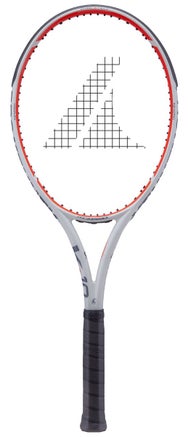
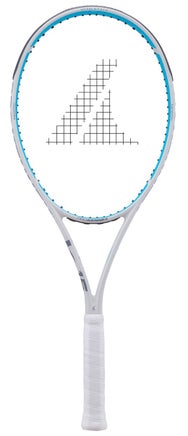
The Ace Station
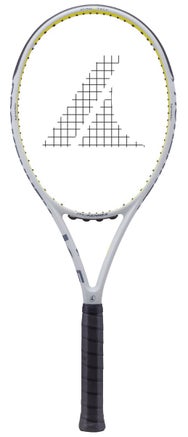
The Ace family is ProKennex’s most technologically advanced line with a strong emphasis on control and feel. These racquets combine control-oriented geometry with the most modern technological advancements from ProKennex. Our testing team found these racquets to have surprisingly good feel and to offer excellent dwell time.
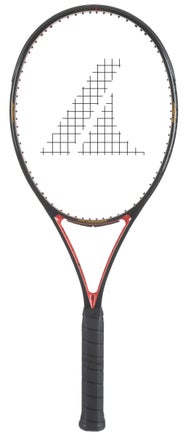
Black Ace Pro
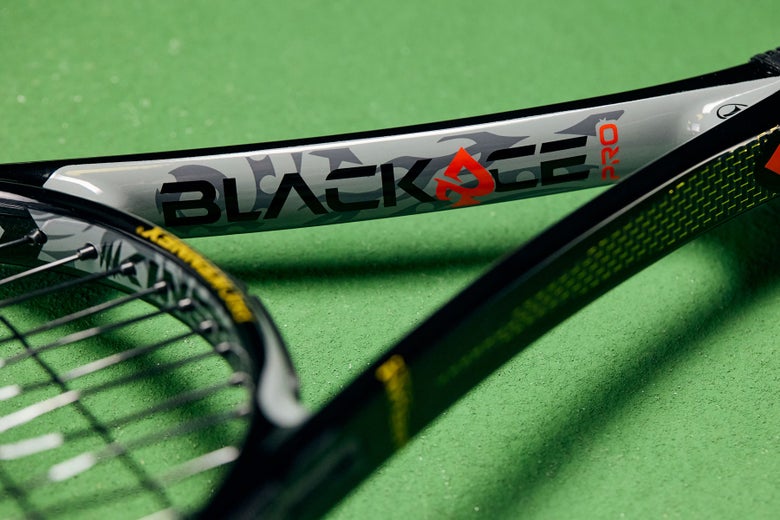
A control-oriented 97 square-inch head size meets a 305-gram unstrung weight, making for one of the rarer head-size to weight ratios in the modern racquet landscape. This racquet proves to be on the lower end of the power spectrum, but its comfortable nature and excellent feel encourages players to swing out without holding anything back. This racquet ended up proving extremely viable for our testing team, earning high marks across the board for its feel and performance. This is one of the more unusual offerings both from ProKennex and within the 97 square-inch options currently in the market. New to this iteration of the Black Ace family is an Aurelian carbon weave, which facilitates a more consistent response from the frame as a whole, and melds nicely with ProKennex’s FlexLogic layup, offering good flexibility and dwell time on every shot. Additionally with its constant 19.5mm beam, this frame slices through the air devastatingly quick, and has a remarkably precise feel to its hitting experience. This racquet feels like a modern twist on a classic frame design, with contemporary internals designed to hold up against the higher pace and level of the modern game.
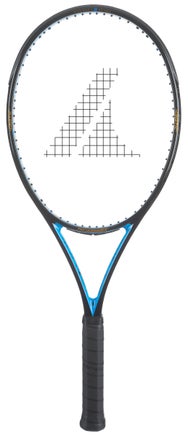
Black Ace 315

The Black Ace 315 comes in at 315 grams unstrung, offering more mass-based power for those who love to let the racquet do the talking. Seriously though, this hefty 100-square inch racquet is not to be trifled with. This racquet is extremely flexible when strung, averaging around 56 for its RA rating, providing massive comfort despite being a more demanding package. With its 21 mm constant geometry, the racquet has a reliably precise nature, but also gets a slight lift in power compared to thinner options like the Black Ace Pro. For advanced players who like a beefier stick and 100 square-inch headsizes, the Black Ace 315 redefines what comfort can look like in a players’ stick.
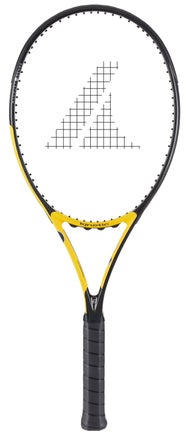
Black Ace 300
The Black Ace 300 is one of the more comfortable and user-friendly options within its spec range. Most 300-gram, 100 square-inch frames tend to be a little stiffer and/or feature thicker beams, often emphasizing power more so than other characteristics. Coming in around 55 for the RA rating when strung, this is one of the most flexible frames with a 100” hoop currently available, coming in only behind the Wilson Clash 100 v3 which measures out around 54 for its RA. To up its stability and power, the balance is shifted away from the handle (around 4 points headlight when strung) to give the racquet more stability and plow-through during contact, which if utilized correctly can help users to hit a heavier ball. Our internal testing team liked this racquet for its easy comfort and noted above-average maneuverability, even with the higher balance point.
Black Ace 285
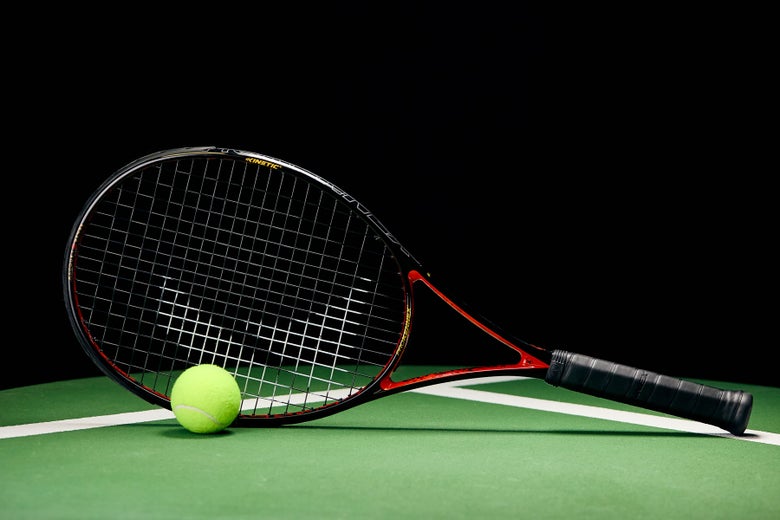
The Black Ace 285 is a great option for intermediate and beginner players seeking ease-of-use and a great access to both comfort and power. While we didn’t test this model through our playtest team, its specs suggest a similar experience to that of the Black Ace 300, though likely aimed at a more beginner and developing group of players. The lower weight helps to increase swing speeds through the air, and the higher balance (around 3 points headlight when strung) offers some increased plow-through and stability. This racquet also makes for a decent platform frame, if you are looking to bring the balance more headlight with something like a leather grip while remaining in the 290-320 gram unstrung weight range.
Black Ace 105
The Black Ace 105 is a bit of a “sleeper hit” for fans of oversized frames. This racquet is comparatively stiffer than the other Black Ace offerings but thankfully is still plenty comfortable with its larger hoop size and 62 RA. Additionally, the racquet utilizes a slightly thicker beam for increased energy return and power, and features a slightly extended length of 27.25”, giving its users increased leverage and reach (incredibly practical on serve and for defense). Usually the tradeoff with longer/larger frames is a drop-off in terms of handling, but this Black Ace 105 still achieves a swingweight around 320-325 on average, making it plenty wieldable. This frame is a good option for those curious about oversized frames in the modern game, and should attract aging players looking for a boost in power and comfort. Worthwhile to demo this one against frames like the Prince 107G and the Wilson Blade 104.
The Q+ Family
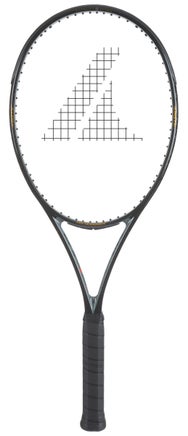
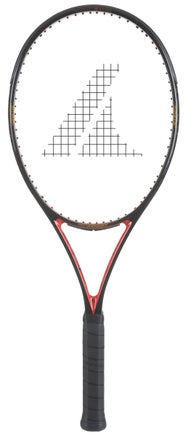
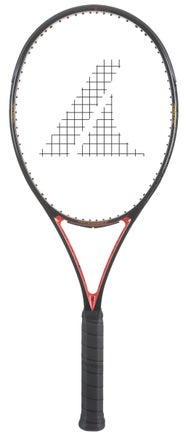
Although the Q+ family gets a bit muddled by its various sub-categories, this line has a strong presence in both the spin and control markets. For clarity’s sake, we’ll divide this ProKennex family into three different options. For this piece, we’ll divide them into the Oversize Q+s, the Spin/Power Q+s, and the Control Q+s, respectively. There are oversized models in the Ki Q+ 15, Ki Q+ 20, and Ki Q+ 30, a true spin/power experience with the Ki Q+ 5 and Ki Q+ 5 Pro, and excellent control options with either the Ki Q+ Tour 305g 16x19 or the Ki Q+ Tour Pro 305g 18x20.
The Oversize Q+s:


Ki Q+ 15
The Ki Q+ 15 (285g) is one of those racquets that should tempt those curious about the slightly oversized hitting experience. ProKennex makes a variety of frames in 105 square-inch range, but the Ki Q+ 15 is perhaps the most versatile of their 105 offerings. This frame is extended in length at 27.5 inches, and emphasizes a powerful geometry with its 26 mm constant beam. Further upping the power access is a high (for ProKennex) stiffness rating of 70, and a more demanding swingweight around 330 on average when strung. This racquet is certainly demanding, but its massive power upsides will help those looking to add pace to their game to then end points more quickly. Great for aging doubles players or those just looking for something above 100 square-inches.
Ki Q+ 20
Increasing both the head-size and the power access is the ProKennex Ki Q+ 20, coming in at 110 square-inches for massive amounts of pop and comfort. This 27.25” racquet is surprisingly maneuverable given its hoop size and 24mm constant beam, coming in around 320 for the strung swingweight on average. Compared to the Ki Q+ 15, this Ki Q+ 20 offers slightly more power sourced from the head size, and will help off-center shots feel even more forgiving. Furthermore, you’ll feel like a vacuum at the net with this racquet in hand, easily pulling in everything within your reach. Like the 15, the Ki Q+ 20 is an excellent choice for aging doubles players who are looking to make the game easier on the whole.
Ki Q+ 30
Offering one of the largest head sizes we carry here at Tennis Warehouse, the Ki Q+ 30 comes in at a whopping 119 square-inches in terms of its head size and sports a massive 28 mm constant beam. As if this racquet needed more power, it features a 70 RA rating (stiffness measurement) and extended length of 27.5 inches, giving you leverage and energy return off the charts when combined with the oversized hoop/beam. Boosting stability and the racquet’s plow through is a 35.18 cm head-heavy balance when strung. This racquet is ideal for older club players who need that extra uptick in power and comfort to help their game stay potent. You won’t find many other frames with this spec profile and comfort to match.
The Spin/Power Q+s:
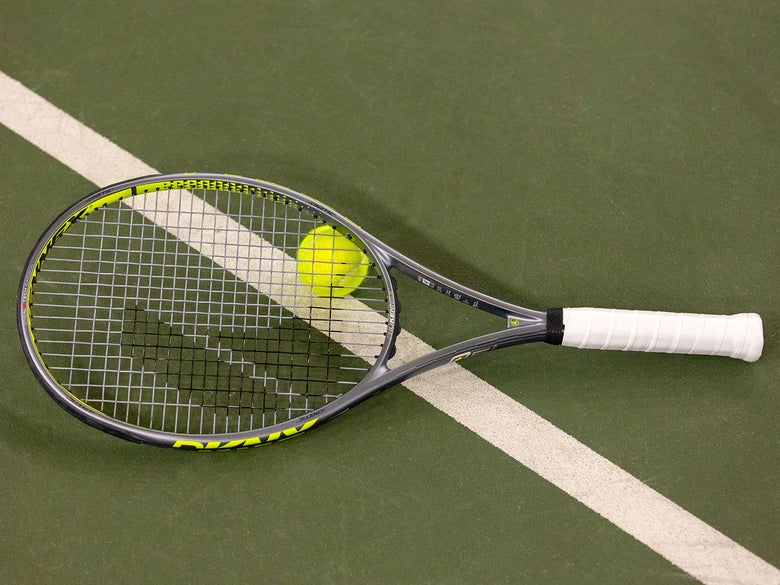
Ki Q+ 5 (300g)
The Ki Q+ 5s have always been a pinnacle example of an “under-the-radar” frame. These racquets share similarities with frames like the Babolat Pure Aero and the Yonex Ezone, yet are much more comfortable by comparison. They also feature the modern classic pattern of a 16x20 stringbed, which helps to improve directional control without sacrificing the inherent power and spin that the family is working with. The 300g version of this frame is an excellent choice for those who like spin-heavy frames but have concerns about their comfort levels over time. ProKennex’s signature movable mass within the frame answers this call by making the overall experience much more comfortable thanks to its ability to mitigate and displace vibrations sourced from impact. This lighter Ki Q+ 5 is easier to whip through the air than its 310 gram sibling, and as such it feels a little easier to take advantage of ProKennex’s unique secondary acceleration source.
Ki Q+ 5 Pro (310g)
The heavier 310g version of the Ki Q+ 5 is a fantastic update to a previously 315 gram frame, which bordered on being unwieldy across a larger audience. This 2026 update still falls nicely into that more players’ frame realm, but manages to still be accessible for intermediate and advanced players. Our team loved this one for its heavy spin generation, massive comfort upsides, and all-around highly playable nature, even with its heftier swingweight (330+ on average). For fans of racquets like the old Pure Aero Tours or DR Ezones, this racquet is a must-try.
The Control Q+s
And last but most certainly not least are the two control-oriented options with the Q+ family, a 16x19 and 18x20, for fans of either pattern. These racquets garnered rave reviews from our playtest team and were praised for their scintillating blend of pace production, dwell time, and pinpoint accuracy.
Ki Q+ Tour 305g 16x19
The Ki Q+ Tour 305g 16x19 is analogous to something like a Wilson Blade 98 16x19 or a Babolat Pure Strike 16x19, but of course, with a significantly stronger emphasis on comfort compared to those frames. That said, heavier hitters on our playtest team found this frame to offer pace to an unexpected degree, making it one of the more appealing comfort-frames in terms of actual performance on court. Its thinner 20.5mm constant box-beam has that classic control-feeling to it, and the racquet is both maneuverable and stable with a swingweight hovering around 325 on average. The term “hidden gem” might not have a better match among ProKennex’s lineup.
Ki Q+ Tour Pro 305g 18x20
The Ki Q+ Tour Pro 305g 18x20 shares all of the benefits of its 16x19 sibling, but with the added upsides of an 18x20 string pattern. The denser pattern gives users more directional control, and a faster rebound rate off the racquet. For an 18x20 string pattern though, our team found this racquet to have a surprising amount of dwell time, slingshotting the ball into and out of the stringbed to great effect. For fans of 18x20 string patterns who are also looking for comfort in spades, this racquet is hard to top.