Wilson Defier 100 Racquet Review
Summary
Blacked-out versions of the Defyer series started popping up in pro players' hands in the summer of 2025, and they created some of the biggest hype surrounding a racquet in a long time. When Wilson finally brought the Defyer racquets to market, they had undergone a color change to a bright glossy red. To help you identify this racquet, it has also been referred to as Project P, Python and Redline during its development. The Defyer 100 benefits from a host of Wilson technologies: lateral bending designed for excellent ball pocketing and feel, an Airfoil Bumper designed for increased maneuverability and a Torque Shaft designed for better stability. Our TW playtesters couldn't wait to hit the courts with the Defyer 100 because they were anxious to see if the hype and the tech could deliver the goods. What they found was a racquet that does everything well but with nothing major standing out. The Defyer 100 has plenty of spin potential and control from the baseline. Up at net, a good balance of maneuverability and stability was the highlight. Some playtesters were looking for a little more easy power at times, specifically on serves. Overall, intermediate to advanced players looking for something new and fun with lots of spin potential or anyone who wants to see what the pro players were testing should definitely give the Defyer 100 a try!
- Great All-Around
- Spin Potential
- Stable for its Weight
- Nothing we could agree on
Final Verdict
Breakdown
Groundstrokes: 8.3
The Wilson Defyer 100 packs a punch from the baseline. Brittany was really excited to see what this racquet had to offer after hearing all the hype. She said, "The first positive for me was that it featured my preferred spec range. However, it did take me some time to get used to the racquet, and the more I used it, the better I liked it. There was a pretty even blend of control and power from the baseline. I did find the power to be on the lower side, and I had to work a little harder to add some pace when I was stepping in to be aggressive. On the plus side, I was able to absorb the pace and redirect it into the corners when I played against bigger hitters, with one of my opponents saying they were impressed with how much pace I was sending back. I was expecting the Defyer 100 to be an overly spin-friendly racquet, and while I did have access to spin, I didn't feel like I needed to change my game for the racquet. I was able to add spin when needed, and I was getting more spin on my backhand without changing my stroke (according to my Zenniz data)."
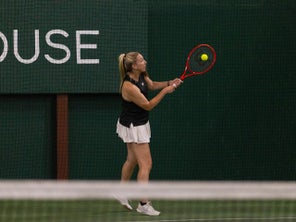
"Man, this racquet got so much hype before I even got it in my hands!" continued Michelle. "I was expecting it to be life changing after hearing all about it for the past year. Unfortunately, I had super high expectations because of the hype. The Defyer 100 is solid from the baseline, easy to swing, stable, fast but not too fast, and it gives me access to all the spin. But again, I thought maybe lightning bolts would come out at contact! I was waiting to fall in love with it but had a couple issues. I just wasn't getting enough easy depth, which is something my game is built around. I hit it side by side with a lot of racquets that I love, like the Babolat Pure Drive 98, the Wilson Blade Pro 100 and the Mizuno Acrospeed 100. I also playtested it with racquets similar in spec and playability, like the Head Extreme MP and Babolat Pure Aero. I really tried to find a distinguishing factor to make it stand out in a positive way, and I just wasn't finding anything that elevated it above the racquets I was comparing it to. It was really effective when I was on defense or a little late to the ball. However, I did struggle with my backhand, and I was missing a bit of plow through at times.”
Tiffani also couldn’t hide from all the buzz surrounding the Defyer 100. She said, “It was hard to go into this playtest without any expectations. There was so much Internet chatter from people who got to play with the Python prototype, so I was expecting huge levels of power and spin. Once I got to try the racquet myself, I was more impressed with how it balanced the power, spin and control. Yes, there was power on tap. Yes, it could produce spin. But I would call both moderate and controllable, which for me is a good thing. I didn't feel forced to play hard-hitting, spin-forward tennis with the Defyer 100. The control and stability allowed me to play my counterpunching game to stay in rallies, and then I could step in or throw in short, angled topspin shots when given the chance. I struggle with my flatter mechanics and defensive playing style if a racquet is too powerful or too spin focused. I also have to say, and forgot to mention during the video, that the sound the racquet makes at impact is nice. It really does sound like a well-struck ball, which also helps with confidence on the court."
"I loved that I could generate lots of pace and spin, which allowed me to mix in angles or rip the ball deep toward the baseline with the Defyer 100."
Chris quickly found the groove with the Defyer 100 at the baseline. He said, "The specs of this racquet are not far off from my regular Tecnifibre TFight 300 racquet, with the exception that the Defyer 100 offers a bit more plow-through power from its higher swingweight. Just like my racquet, I found it easy to generate spin with the Defyer 100. I was able to whip the racquet through contact, allowing me to up the pace or RPMs at will. My favorite shot to hit was a mid- or short court forehand, and I had a ton of fun mashing on the ball whenever I got a look at one of those. I liked the power I got from the Defyer 100 when I was pushed into a more defensive position because it enabled me to return the ball with pace and depth, but the most fun part of hitting with this racquet was when I was on the attack."
Volleys: 8.3
The Defyer 100 felt very fast and easy to maneuver up at net for the TW playtesters. Chris said, "I had fun carving angles while cutting under the ball to add spin, and I was able to get drop volleys to drop very quickly. The Defyer 100 felt very responsive when I was looking to put a volley away with pace. I had success punching volleys deep. I sensed the ball got in and out of the stringbed much faster than with the Defyer 98 Pro, which had a softer response that gave the impression of more dwell time. If you like to just line up the stringbed on your volleys and get a very direct and crisp response to your target, I think you will like what the Defyer 100 has to offer."
"At net is where I was impressed by the stability levels," added Tiffani. "I didn't think too much about stability from the baseline, but I always felt that the Defyer 100 handled pace pretty well at net. There's enough pop on volleys to get it back deep, which is my typical play. The racquet also maneuvered easily enough, so overall, my volleying experience was a positive one."
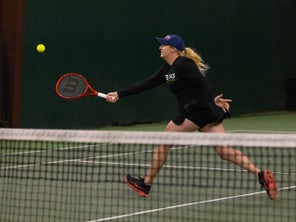
Michelle had no complaints at net with the Defyer 100. She said, "It was stable, it was quick, it allowed me to punch volleys deep, drop them short, swing big or sneak some touch. Again, nothing stood out that was life changing at net, but it was solid."
Brittany felt the Defyer 100 met her needs for stability without sacrificing any maneuverability. She said, "I was able to get the Defyer 100 into position without having to think about it, and it never felt unstable against any passing shot. The racquet also felt great on pickup volleys. Additionally, I liked the feel, and I felt more connected to the ball than I have with past Wilson racquets, which gave me the confidence to mix up my volleys with depth and spin. (Side note: I did have some wrist pain one of the days after hitting with the Defyer, so I didn't find it to be the most comfortable racquet)."
Serves: 8.3
The TW playtesters enjoyed the spin potential they found when serving with the Defyer 100, but they were looking for a little more pace at times. Tiffani appreciated how easy the racquet was to use. She said, "I was getting good pace and spin on my serves, but I didn't get record-breaking numbers. I was happy that I could serve consistently with it. It moves smoothly overhead, and it felt easy to direct the ball out wide, into the body or up the T."

"The easy pace and spin I found from the baseline with the Defyer 100 transitioned to my service game," added Chris. "I was able to get a nice arc on the ball, and that allowed me to give the net ample clearance while still getting the ball to dip well inside the lines. I'm never one to blow opponents off the court with my serve, but with the Defyer 100 I felt like I was serving aggressively and starting points on my front foot."
Wanting a little bit more power, Brittany found herself mostly focused on spin and placement. She said, "I could hit a big flat serve but it took a little more effort, so I limited hitting those to just a few times per match. I would say overall my average speed was down slightly."
"I felt more consistent with my serves thanks to the spin and precision that the Defyer 100 offered."
Michelle was in a similar boat. She said, "I found good success when I leaned into slices and kicks. I found adequate power, but not as much as I would with a Babolat Pure Drive or Pure Aero. I thought the Defyer 100 sliced through the ball well, and my kick serves were hopping."
Returns: 8.4
The return of serve proved to be the top stroke for the TW playtesters with the Defyer 100. Chris found himself starting on the offense thanks to the Defyer 100. He said, "I think if you are the kind of player who likes to mash on the ball on returns, the Defyer 100 would be a great fit for your game. I'm not necessarily that player, and even I had a good time on returns with this racquet! Aggressive topspin returns were my favorite. My slice backhand was also working well, but hitting that shot consistently was not nearly as fun as taking a good rip at the ball with some topspin."
Brittany's favorite shot to hit, no surprise, was the return. She said, "This is where I appreciated the lower power levels. I could hit my returns without fear of overhitting. I could step in and just pick a target when I was returning first serves. On second serve returns, I could swing freely and fast and keep the return controlled in the court.
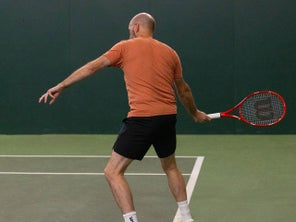
"Because I love returning so much, and because I tend to be someone who keeps points short, I was hoping the Defyer 100 would be a one-and-done returning racquet for me," continued Michelle. "But that wasn't necessarily the case. I could hit good returns; the racquet was speedy enough to craft aggressive angles, and I most definitely got some free points with this racquet. I just isn’t as massive or stable as my Wilson RF 97, which I know is comparing an apple to an orange, but the plow through just wasn't there. If I didn't get a good enough rip on the ball it was coming back for sure. I did feel confident taking aggressive cuts right away. I just wasn't always winning the point with the return, and I had to use the return more as a way to build a point offensively."
Tiffani was able to return confidently by tapping into the control. She wrapped up the playtest, saying, "Returning with the Defyer 100 was much like my experience on groundstrokes. I felt comfortable with the control levels and could play my shots without thinking about it too much or worrying that I was going to spray the ball unexpectedly. I liked the stability levels, and I could either be more aggressive or chip the ball.”
Breakdown Summary
| Groundstrokes | 8.3 |
| Volleys | 8.3 |
| Serves | 8.3 |
| Returns | 8.4 |
| Power | 8.3 |
| Control | 8.3 |
| Maneuverability | 8.4 |
| Stability | 8.2 |
| Comfort | 8.1 |
| Touch / Feel | 8.2 |
| Topspin | 8.5 |
| Slice | 8.3 |
Final Verdict |
8.4 |
Tech Specs
| Length | 27 in |
| Head Size | 100 sq in |
| Weight | 11.2 oz |
| Balance Point | 12.79 in |
| Construction | 23.8mm / 25mm / 23mm |
| String Pattern | 16x19 |
| Length | 68.58 cm |
| Head Size | 645.16 sq cm |
| Weight | 318 g |
| Balance Point | 32.49 cm |
| Construction | 23.8mm / 25mm / 23mm |
| String Pattern | 16x19 |
Tennis Warehouse University Lab Data
| Score | Grade | |
| Flex Rating | 66 | MEDIUM |
| Swing Weight | 326 | MEDIUM |
Playtester Thoughts

Brittany
A unique addition to the Wilson lineup. The power/control sits between the Blade and Ultra for me, with a little more spin potential. Other racquets that play similarly include the Head Extreme MP, Babolat Pure Aero and Dunlop SX 300.
The Defyer 100 does everything well, but nothing stood out good or bad.
I would have liked a little more easy power, and I’m not the biggest fan of the flared butt cap because I hold low on the grip.
| Brittany's Breakdown | |
| Groundstrokes | 8.2 |
| Volleys | 8.2 |
| Serves | 8.0 |
| Returns | 8.4 |
| Power | 7.8 |
| Control | 8.3 |
| Maneuverability | 8.0 |
| Stability | 8.0 |
| Comfort | 7.4 |
| Touch / Feel | 8.2 |
| Topspin | 8.6 |
| Slice | 8.3 |
| Overall | 8.2 |
Michelle
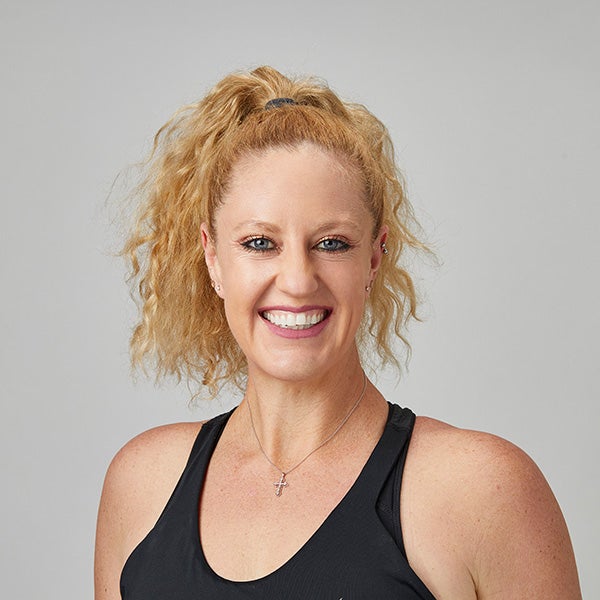
I spent the entire playtest hitting the Defyer 100 side by side with other racquets so I could really figure out something to set it apart and make it stand out. I found it to offer a similar experience as the Extreme MP, but I found easier depth with the Head racquet. Next to my current favorite Wilson in-line racquet, the Blade Pro 100, I couldn't figure out why the Defyer 100 wasn't offering me MORE power and MORE spin, but I chalked it up to having more confidence in the 16x20 string pattern of the Blade Pro 100. I found the Babolat Pure Aero, Aero 98 and Drive 98 had a bit more pop to them.
I like it, but I wanted to LOVE it! I wanted it to change my life, but it didn't. I like that it’s stable, easy to swing, offers good power and is nice on defense.
Yes, I've said it multiple times, but the high expectations were tough to meet, and I was hoping for something that stood out enormously enough to make this a stick I could potentially switch to. I also found it to be fairly string sensitive.
| Michelle's Breakdown | |
| Groundstrokes | 8.0 |
| Volleys | 8.0 |
| Serves | 8.0 |
| Returns | 8.0 |
| Power | 8.5 |
| Control | 8.0 |
| Maneuverability | 8.5 |
| Stability | 8.0 |
| Comfort | 8.0 |
| Touch / Feel | 8.0 |
| Topspin | 8.0 |
| Slice | 8.0 |
| Overall | 8.2 |

Tiffani
Another red power-spin racquet that's pretty popular comes to mind. The Yonex VCORE 100 8th Gen came out earlier in 2026, and although both are red, there are definite differences. I find the Defyer 100 to offer more control and the VCORE 100 to be more powerful. I would also compare this Defyer 100 to the Head Extreme MP 2026 and the latest Babolat Pure Aero. All of these are power-spin racquets that deliver plenty of control for a balanced hitting experience, and they don’t require me to emphasize spin to get them to work for my game.
The Defyer 100 is easy to adjust to. It reacts well to both spin shots and flatter groundstrokes.
I have no major complaints. The Defyer 100 is well rounded, yet nothing stood out as outstanding. I also struggle with the flare of the Wilson butt cap, and I needed to use a smaller grip size to feel comfortable.
| Tiffani's Breakdown | |
| Groundstrokes | 8.3 |
| Volleys | 8.4 |
| Serves | 8.5 |
| Returns | 8.4 |
| Power | 8.3 |
| Control | 8.2 |
| Maneuverability | 8.5 |
| Stability | 8.3 |
| Comfort | 8.4 |
| Touch / Feel | 8.2 |
| Topspin | 8.5 |
| Slice | 8.1 |
| Overall | 8.4 |

Chris
The Defyer 100 is right in there with the likes of the Babolat Pure Aero, Yonex VCORE 100 8th Gen and Head Extreme MP 2026. Out of all of those I think it compares closest to the Pure Aero, but I'd recommend demoing all of them because they all bring a ton of useful playability to the court.
The power, spin and maneuverability make the Defyer 100 a great racquet to attack the court with. The racquet is also impressive in defensive situations, but the real fun is had when looking to hit winners.
The feel at impact is not as pleasing as the Defyer 98 Pro, but I play better with the Defyer 100, so I'm willing to ignore that.
| Chris's Breakdown | |
| Groundstrokes | 8.6 |
| Volleys | 8.5 |
| Serves | 8.5 |
| Returns | 8.6 |
| Power | 8.7 |
| Control | 8.5 |
| Maneuverability | 8.6 |
| Stability | 8.5 |
| Comfort | 8.4 |
| Touch / Feel | 8.5 |
| Topspin | 8.7 |
| Slice | 8.6 |
| Overall | 8.6 |