Dunlop Racquet Guide
One of tennis’ legacy manufacturers is slowly but surely starting to see a reemergence on tour. Dunlop racquets have a classic lineage and more of a cult following nowadays, but make no mistake, this manufacturer produces a variety of excellent frames tailored to those who know what they are looking for. We find Dunlop frames to have exceptional performance and playability, even if they are less-known to recreational players.
Power: The FX 500
FX 500 Tour
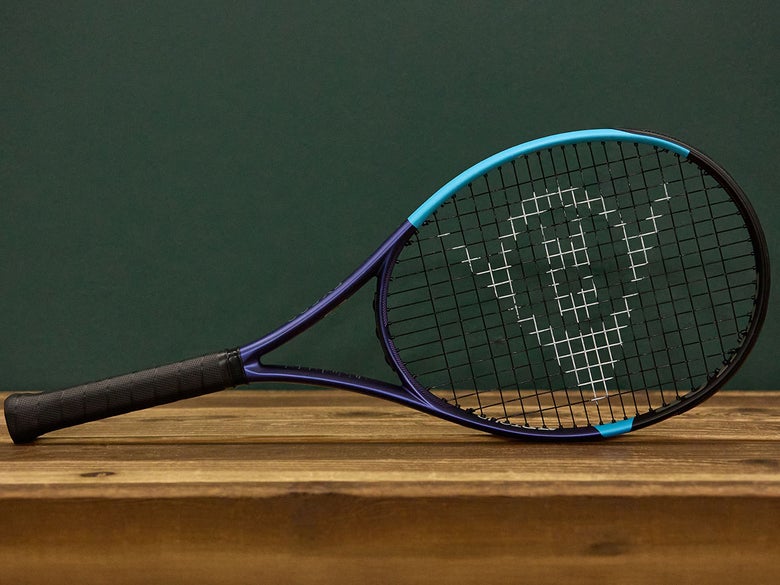
The FX 500 Tour is not only one of the more widely adopted Dunlop frames on tour (we see you, Jack Draper), but it has also established itself as one of the highest performing frames in the 98 square-inch head size realm of power racquets. This racquet is a close competitor to the likes of a Yonex Ezone 98, Tecnifibre TFight 300s, or the Wilson RF 01, all of which also feature a 16x19 string pattern. The FX 500 Tour though sports a more traditional hoop design, but is offset by more modern internals. The latest version implements a zigzagging placement of the centermost grommets on the cross strings. This diagonal arrangement is intended to increase the stiffness of the strings for more power while also allowing for more string movement to boost spin production. “Controllable power” is a term that gets tossed around a lot for racquets in power-based silos, but this FX 500 Tour manages to thoroughly earn that description. Our playtest team found a surprisingly high amount of playability and performance from this frame, praising its reliable and precise nature. Though situated more as a power-based option, the FX 500 Tour proved to have plenty of spin, letting our team hit topspin drives and slices with ease. The most direct comparison to this racquet for our team did indeed prove to be the Ezone 98, which is not only one of the most well-rounded options in its class, but across racquets as a whole. Check out our video review or write-up of this modern classic!
FX 500
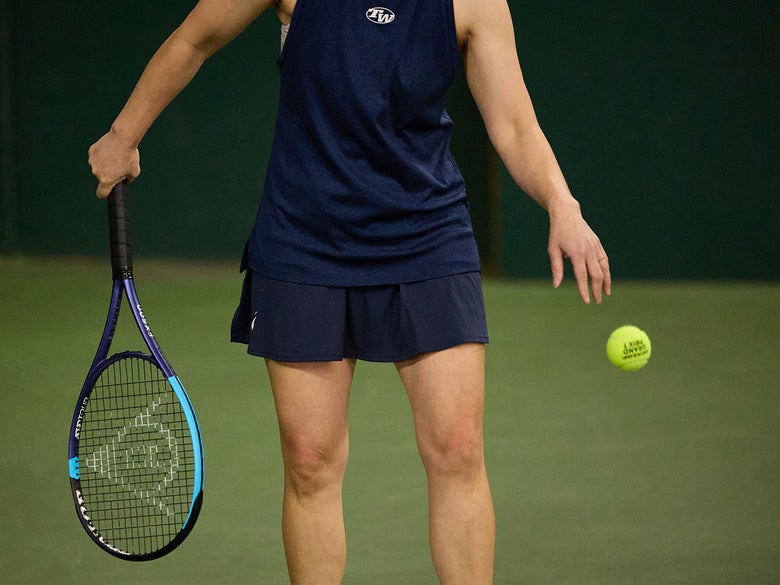
If the FX 500 Tour is analogous to the Ezone 98, then the standard FX 500 can be likened to the Babolat Pure Drive. This 300 gram, 16x19 string pattern, 100 square-inch hoop racquet is aimed at giving its wielders more outright power access, letting them comfortably increase pace and depth. Like its Tour sibling, the FX 500 uses a zigzagging seating of the centermost cross strings, which simultaneously increases stringbed stiffness for more power access, and promotes greater string movement for increased snapback and subsequently spin generation. This racquet utilizes a couple features for easy power access, namely its thicker beam (especially in the midsection) and higher stiffness of 68 RA. Though on paper this racquet appears to be on the harsher side of things impact-wise, the internals are designed to be a little more comfortable than the specs would suggest. Additionally, thanks to a relatively moderate swingweight around 320, this racquet moves through the air quickly but steadily, which helps give this racquet some good stability throughout your swing. This is a great racquet to demo alongside the standard Pure Drive, the Extreme MP, and the Prince Ripcord 100. For fans of power racquets that don’t compromise on feel, this FX 500 is more than worth considering.
Lightweight FX 500s
Rounding out the rest of their FX 500 series are a couple of lightweight options from Dunlop. The FX 500 LS at 285 grams unstrung, the FX 500 Lite at 270 grams, and the FX 500 Super Lite at 255 grams. These three lightweight options all keep the same 100 square-inch hoop and 16x19 string pattern, which gives players looking for a lightweight option three choices depending on their specific needs. The LS makes for a great platform if that’s your vision, and the Lite and Super Lite offer ease-of-use for newer and aging players alike. Perhaps more noteworthy is that Dunlop’s lightweight options in this family do not offer additional leverage via any extended lengths, and also feature no oversized hoops. This makes them a great choice for junior players who are looking to grow with this head-size/family.
Spin: The SX 300
SX 300 Tour
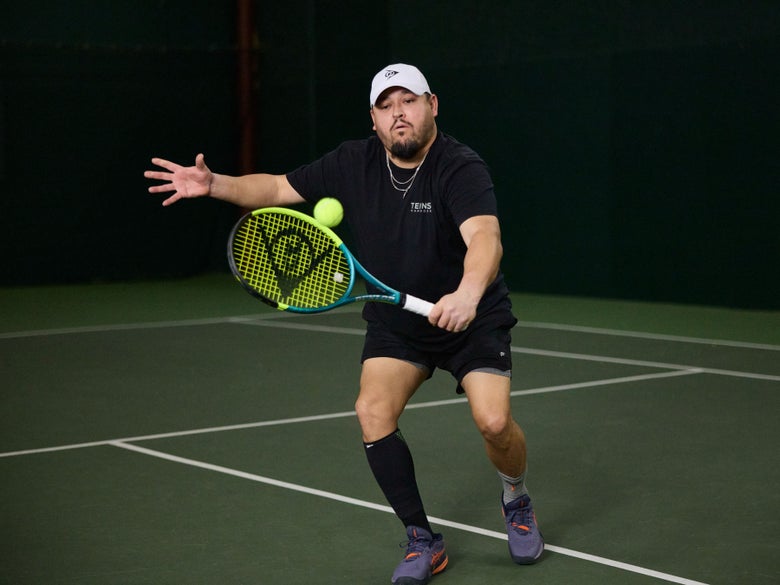
There might not be a more “under-the-radar” option for a spin-first racquet than Dunlop’s SX 300 Tour. This spin monster features a slightly smaller head size of 98 square-inches for additional control, and an ever-reliable 16x19 string pattern for a great blend of power and spin production. Design-wise, keen eyes might notice the groove alongside the sides of the racquet, primarily in the lower hoop and throat of the beam. This is dubbed as a “V-Energy Shaft” and it helps the racquet flex and breathe during impact more, which lets users feel the ball pocket more deeply into the strings. For those who like to impart high amounts of spin onto their shots, this extra “holding” of the ball can be conducive for heavier topspin mechanics. This racquet also seems to fall in that realm of “easy-to-swing” but still plenty stable, which is a hard balance to achieve. Our playtest team praised the spin of this racquet and found it to offer a sufficient amount of power and above-average control. Check out our video review below and our write-up here! This racquet is worth demoing alongside a Pure Aero 98, a VCORE 98, and an Extreme Pro.
SX 300
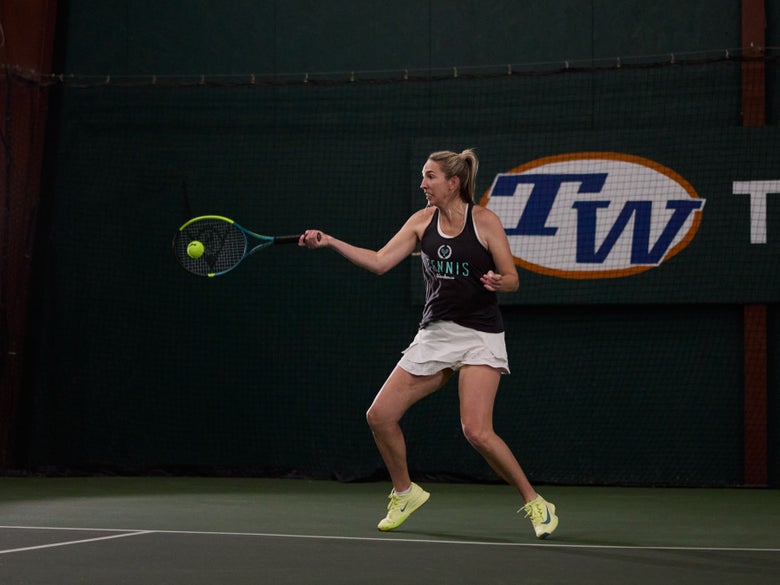
The SX 300 hopes to capture what many racquets of the last few decades have set their sights on; a 300-gram, 16x19, 100 square-inch option that provides its users a ton of spin without sacrificing power access. The gold-standard in this realm of course is the Babolat Pure Aero, which helped usher in many a modern forehand based around more extreme topspin mechanics. While the Aero and other frames in this area tend to utilize higher stiffness and rounded geometry to generate most of their spin/power, the SX 300 seeks to stand out with above-average ball pocketing, despite its higher stiffness and more spin-focused beam design. A key tenet of this design theory is Dunlop’s “V-Energy Shaft” and the additional ball pocketing it helps to facilitate. Further increasing the possibility of heavy spin are Dunlop’s Spin Boost XT grommets, which are angled in certain directions to increase the ability of the main strings to snap back into their original place more easily. This racquet reviewed well internally with our product testing team, earning high marks for spin (naturally) as well as maneuverability and stability, which can often come at the cost of the other. See the video review below and the written review linked here.
Lightweight SX 300s
Like the FX family, Dunlop offers some a few lightweight SX 300s for ease-of-use and those who maybe want to customize their racquet up to a more wieldable spec. The SX 300 Lite and LS come in at 270 and 285 grams, respectively. These lighter weight options are great for junior players, aging experts, and/or those who like to customize their frames up to a more common static weight while starting from a lower weight stock option.
Control: The CX
The CX silo is Dunlop’s most varied lineup, with a variety of head sizes, weights, and string patterns, seemingly offering something for everyone. There are 95 square-inch options, 98s, and 100s in this control-based family (even an oversized 105), so we’ll start with the smallest options (most demanding/advanced) and work our way up.
CX 200 Tours: 16x19 & 18x20
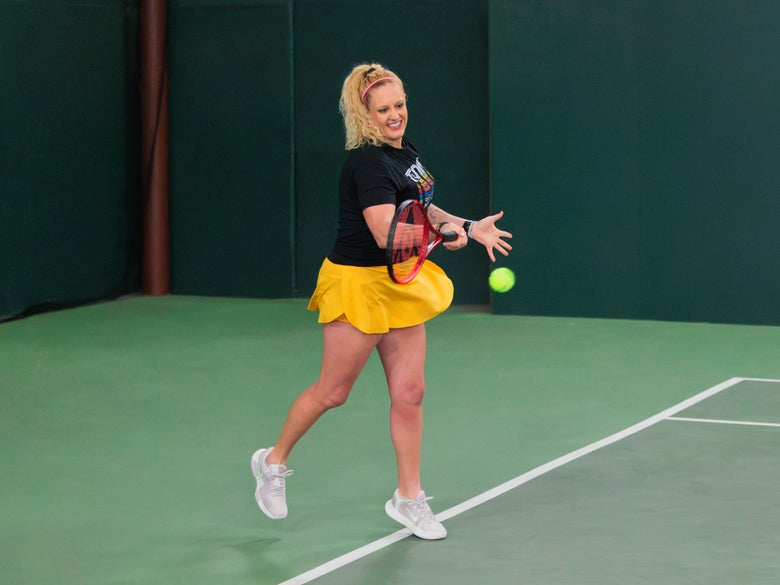
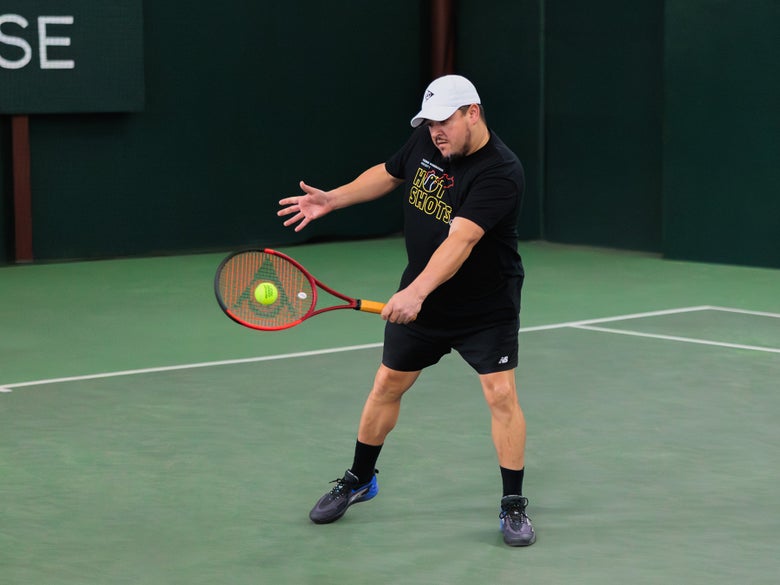
These 95 square-inch racquets exist as a rarer head-size these days. While they certainly ask more of you in terms of precision and creating good contact, the upsides in terms of control and spot-targeting on court are massive. Dunlop’s CX 200 Tours are more flexible than the SX or FX lines, offering easy comfort while still supplying enough firmness to get good pop off the strings. These slightly smaller head sizes come in two different string patterns, both a more open, powerful 16x19 and a denser, more control-oriented 18x20. Additionally, their constant box beams are quite thin at a taper of 20.5mm all the way around. As such, the inherent control of these CX 200 Tours is quite good for those who prefer a stick that helps tame some of their power. Currently, Tennis Warehouse only carries a handful of other 95 square-inch and under racquets, namely the VCORE 95 and the Head Prestige Tour. Comparatively, the VCORE 95 offers a little more spin/power, and then the Prestige Tour has a softer flex of 62, but a thicker, 22mm constant beam (and a hefty 330+ swingweight). These CX 200 Tours are a rare offering, so be sure to demo them if you’re interested in a smaller head size than most standard frames. If you want the most control-oriented setup, consider the 18x20. If you want a little more free pop but still prefer that smaller head size, opt for the 16x19. Check out our 16x19 and 18x20 reviews below!
CX 200
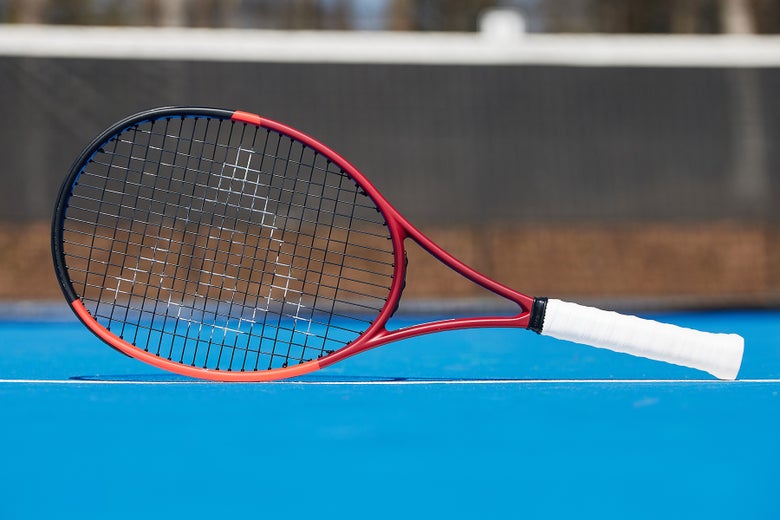
The standard CX 200 is along the lines of something like a Wilson Blade 98 16x19, a Babolat Pure Strike 98 16x19, Tecnifibre TF40 305 16x19, or a Prince Tour 98. These frames combine power/spin-oriented 16x19 string patterns with slightly higher 305-gram weights for more mass-based power, both of which help offset the slightly more control-oriented 98 square-inch head size. The CX 200 has a constant beam of 21.5mm, a middle-of-the-road stiffness at 64 RA, and a fairly whippy swingweight of 314 when strung, making it one of the faster-swinging options in its class. This racquet proved to excel on touch shots and more finesse-based mechanics. The exceptional maneuverability also was a standout area of performance for our team. So if you’re looking for a racquet whose primary identity is control and quick handling, the CX 200 is an excellent choice. If you’d like more information, consider taking a gander at our review, either written or the video version below.
CX 400 & CX 400 Tour
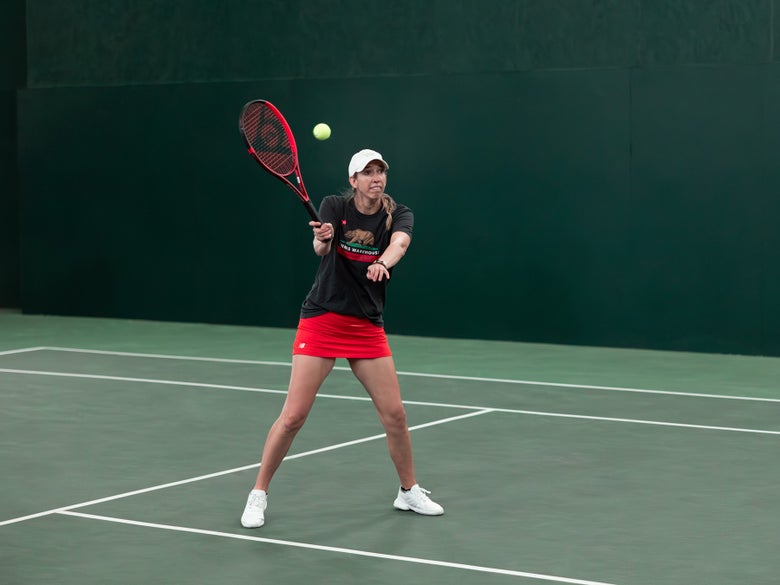
The CX 400 series is an interesting one. Its primary features are a 100 square-inch head-size and a 16x19 string pattern, but it comes in two distinctly different weight options. The regular CX 400 comes in at 285 grams unstrung, and the CX 400 Tour weighs in at 300 unstrung. The standard CX 400 is one of the best beginner options out there, as this racquet is easy to swing, and had a nice blend of control geometry and power-oriented specs for its head size and string pattern. The CX 400 Tour though is a real anomaly, as you don’t see a ton of frames at the 100 square-inch head size be this focused in terms of their control. This is a good racquet to demo alongside the Head Speed MP, the Wilson Blade 100, and the Babolat Pure Strike 100.
LX: Oversize
The last family from Dunlop is a more specialized one, offering oversized hoops all the way up to 115 square inches. These LX racquets are great for experienced doubles players who need a boost in either power or forgiveness. The additional power is met with some increased comfort, helping doubles players end points more quickly and easily at net. The extra real estate on the stringbed is practical when reaching for volleys and when looking to absorb pace with ease. There are three head sizes available in this family, a 16x17, 107 square-inch option, two 16x18, 110 square-inches choices, and a 16x18, 115 square-inch behemoth. These racquets are primarily designed for seasoned court veterans who need an uptick in power and forgiveness.
If you're looking for more racquet guides and breakdowns, check out our Learning Center for more brand explorations and other racquet concepts explained!