How to add power to your racquet
Are you looking to add some power to your racquet to help you compete better with the more modern game? Here are a few simple ways to do just that without having to change racquets or adjust your strokes:
1. Drop your string tension
This is usually the first thing you should try because you don't have to change either your string or racquet of choice. The next time you get your racquet re-strung, try it a couple of pounds looser than you normally would string your racquet at. Think of your stringbed like a trampoline - the looser the tension, the more the ball sinks in at contact and then shoots out with more energy and at a higher trajectory. If you are unsure what tension your racquet is currently strung at, take a look at the recommended tension range (this is usually listed on your racquet frame) and try a tension at the lower end of the range.
2. Try a softer string
If dropping your tension doesn't give you the response you're looking for or you simply know what tension you like your racquet strung at, try a softer string! The softer a string is the more elasticity it will have, allowing it to deflect at impact and then transfer more energy back into the ball as it leaves the strings. The easiest way to try a softer string is simply to go with a thinner gauge of the same string that you currently use. The higher number the gauge is (17 vs. 16), the thinner it is. Whenever you see an "L" next to the number, that stands for "light", which also means thinner (ex. 16 vs. 16L).
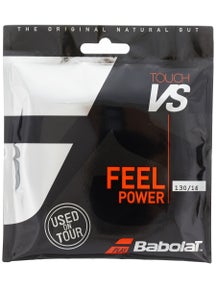
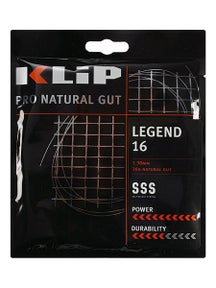
You could also opt for a softer string altogether. If you like to use polyester strings, there are softer options out there that are a little livelier and more arm-friendly than most other ones. You could also go with a softer material like a nylon multifilament or even natural gut, the softest and most elastic string available. Be sure to check out our String Stiffness Database to compare the stiffness of some of the most popular strings out there.
3. Customize your racquet (add weight)
Another good option to try is to add a bit of weight to the hoop of your racquet in order to help you "win the collision with the ball" at contact. Remember back to your high school physics class - Force = mass x acceleration. As long as you can swing your racquet at the same speed, a heavier racquet will exert more force on the ball when you hit it.
By adding weight at the top of the hoop (the 12 o'clock position), you'll the biggest boost in power with the least amount of weight. You can also add weight in other positions on the frame too, and we want to encourage you to experiment and find the setup that works best for you.
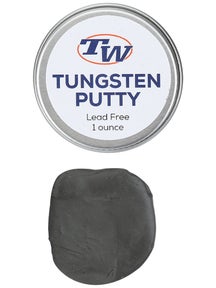
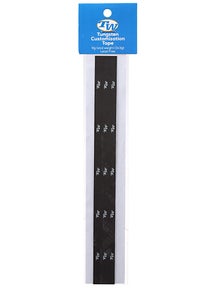
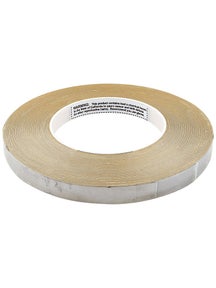
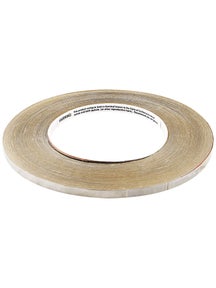
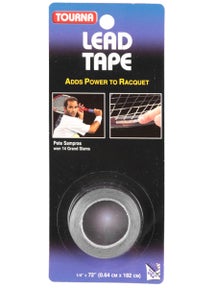
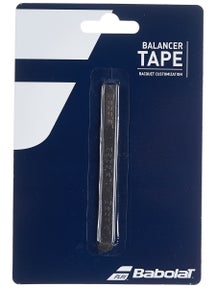
Tungsten tape is the newest safe and easy way to make small adjustments to the weight of your racquet, but you can certainly use lead tape as well. Check out our article on How to Customize Your Racquet for a more detailed explanation of this process.
How to add power to your racquet
Are you looking to add some power to your racquet to help you compete better with the more modern game? Here are a few simple ways to do just that without having to change racquets or adjust your strokes:
1. Drop your string tension
This is usually the first thing you should try because you don't have to change either your string or racquet of choice. The next time you get your racquet re-strung, try it a couple of pounds looser than you normally would string your racquet at. Think of your stringbed like a trampoline - the looser the tension, the more the ball sinks in at contact and then shoots out with more energy and at a higher trajectory. If you are unsure what tension your racquet is currently strung at, take a look at the recommended tension range (this is usually listed on your racquet frame) and try a tension at the lower end of the range.
2. Try a softer string
If dropping your tension doesn't give you the response you're looking for or you simply know what tension you like your racquet strung at, try a softer string! The softer a string is the more elasticity it will have, allowing it to deflect at impact and then transfer more energy back into the ball as it leaves the strings. The easiest way to try a softer string is simply to go with a thinner gauge of the same string that you currently use. The higher number the gauge is (17 vs. 16), the thinner it is. Whenever you see an "L" next to the number, that stands for "light", which also means thinner (ex. 16 vs. 16L).
You could also opt for a softer string altogether. If you like to use polyester strings, there are softer options out there that are a little livelier and more arm-friendly than most other ones. You could also go with a softer material like a nylon multifilament or even natural gut, the softest and most elastic string available. Be sure to check out our String Stiffness Database to compare the stiffness of some of the most popular strings out there.
3. Customize your racquet (add weight)
Another good option to try is to add a bit of weight to the hoop of your racquet in order to help you "win the collision with the ball" at contact. Remember back to your high school physics class - Force = mass x acceleration. As long as you can swing your racquet at the same speed, a heavier racquet will exert more force on the ball when you hit it.
By adding weight at the top of the hoop (the 12 o'clock position), you'll the biggest boost in power with the least amount of weight. You can also add weight in other positions on the frame too, and we want to encourage you to experiment and find the setup that works best for you.
Tungsten tape is the newest safe and easy way to make small adjustments to the weight of your racquet, but you can certainly use lead tape as well. Check out our article on How to Customize Your Racquet for a more detailed explanation of this process.
Other Videos on TW Academy
 5 Value Thin Gauged Polys
 5 Ways to Deal with Junk Balls
 How to Beat a Counterpuncher (Pusher)
 All About Natural Gut
 Best Tennis Racquets of 2018
 Pros & Cons of Multi Tennis Strings
 Pros & Cons of Hypbrid Tennis Strings
 Pros & Cons of Poly Strings
 Racquet Beam Widths Explained
 How to Not Double Fault
 How to Beat an Aggressive Baseliner
 First Look: Head Graphene 360 Extreme Racquets
 Quick Tip: Playing Styles Explained
 How to Combat Arm Pain
 First Look: Babolat SFX3
 Quick Tip: Best Women's Light Shoes
 First Look: Nike Court Air Zoom Zero
 Improve Quick Tip: Be More Consistent
 Quick Tip: How to Slide on Clay
 Improve Quick Tip: Add Power to your Racquet
 Improve: Tennis Bag Essentials
 Trick Shots with the Bryan Brothers
 ATP Pro Flip Krajinovic's Warm-Up & Practice
 Improve Quick Tip: Basic Tennis Terms Explained
 Isolation Drill w/ Taylor Fritz & Bethanie Mattek-Sands
 Improve Quick Tip: How to Stencil a Racquet
 Kill Shot Drill w/ Taylor Fritz & Bethanie Mattek-Sands
 Improve Quick Tip: Benefits of Leather Grips
 Serve +1 Drill w Taylor Fritz & Bethanie Mattek-Sands
 Improve Quick Tip: Best Control Racquets
 Volleys & Returns with Lauren Davis
 Footwork Drills w/Shelby Rogers: Figure 8 Drill
 Improve Quick Tip: Nike Vapor vs. Prestige
 Footwork Drills w/Shelby Rogers: Ball Toss Drill
 Improve Quick Tip: How to combat cramping
 Footwook Drills with Shelby Rogers: 4 Cone Shuffle
 Improve Quick Tip: Preventing a Slow Start
 Improve Quick Tip: Powerful Racquets
 Improve Quick Tip: Tournament Expectations
 Improve Quick Tip: Vibration Dampeners
 Improve Quick Tip: Expanding the Sweetspot
 Improve Quick Tip: Volleying
 TW Improve Quick Tip: How to Customize (tailweight)
 TW Improve Quick Tip: Shoe Fit & Sizes Explained
 TW Improve Quick Tip: Durable vs. Speed Shoes
 Improve Quick Tip: How to Choose an Overgrip
 Improve Quick Tip: What is Plow Through?
 TW Improve Quick Tip: How to Choose a Bag
 TW Improve Quick Tip: String gauges explained
 Doubles Return Drill with Bethanie Mattek-Sands
 Doubles Attack Drill with the Bryan Brothers
 Triangle of Death Drill with Bethanie Mattek-Sands
 Swinging Volley Drill with Bethanie Mattek-Sands
 Hitting inside the baseline with Bethanie Mattek-Sands
 Volley & Overhead Drills w/Bethanie Mattek-Sands
 Net Player Strategy w/Bethanie Mattek-Sands
 Volley, Volley Drill with Bethanie Mattek-Sands
 Reaction drills for better shot making w/Kevin Anderson
 Improving your volley technique w/ realifetennis.com
 Taking the ball early w/ Kevin Anderson & Realifetennis
 An Effective Warm Up - Kevin Anderson Realife
 How to hit a return
 How to hit a 'tweener shot
 How to hit a forehand
 How to hit a two-handed backhand
 How to hit a backhand slice
 How to hit a tennis serve
 How to hit a one-handed backhand
 How to hit a forehand volley
 Doubles Drills with Chris & Marco
 Doubles Drills with Michelle & Brittany
 Doubles Drills with Andy & Spencer
 Doubles Drills with Granville & Mark
 Doubles Drills with Troy & Sebastian
 Dr. Allen Fox - An emotional game
 Dr. Allen Fox - Choking in tennis
 Dr. Allen Fox - Confidence in tennis
 Dr. Allen Fox - Controlling emotions
 Dr. Allen Fox - Dominance
 Dr. Allen Fox - Emotional balance
 Dr. Allen Fox - Self-belief
 Dr. Allen Fox - Stress
 Dr. Allen Fox - Strong emotions
 Dr. Allen Fox - The #1 rule in tennis
 Dr. Allen Fox - The Plan B of tennis
 Drop Shot Change Up Drill with Jamie Loeb
 Serev Plus One Drill with Jamie Loeb
 Three Ball Drill with Jamie Loeb
 TW Improve Quick Tip: Dynamic Stretching for Tennis