Tecnifibre ATP TFight 320 XTC Racquet Review
| Groundstrokes | 80 |
|---|---|
| Volleys | 78 |
| Serves | 78 |
| Returns | 80 |
| Power | 77 |
| Control | 82 |
| Maneuverability | 80 |
| Stability | 80 |
| Comfort | 77 |
| Touch/Feel | 76 |
| Topspin | 77 |
| Slice | 80 |
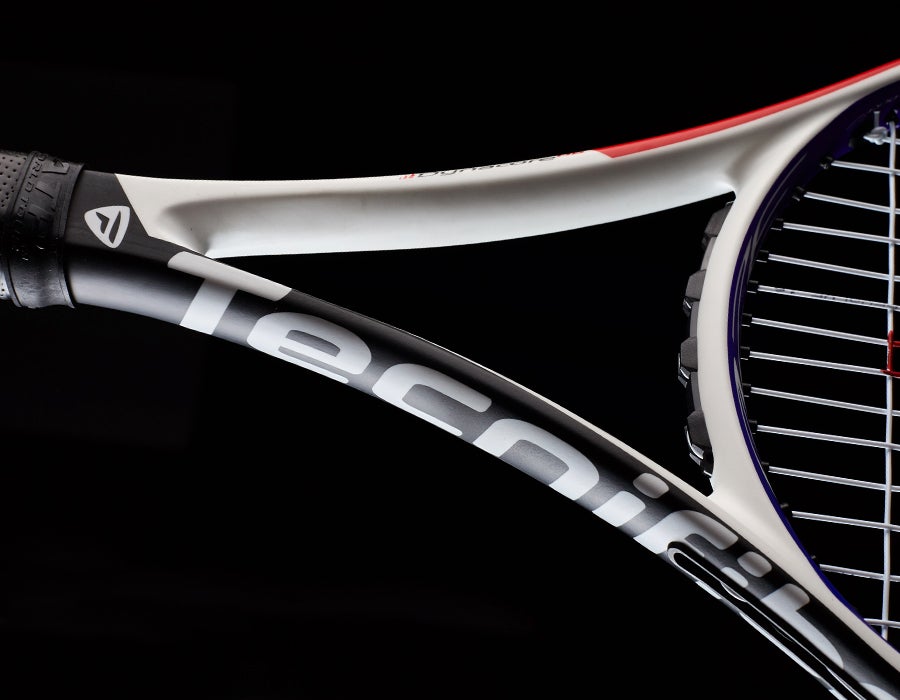
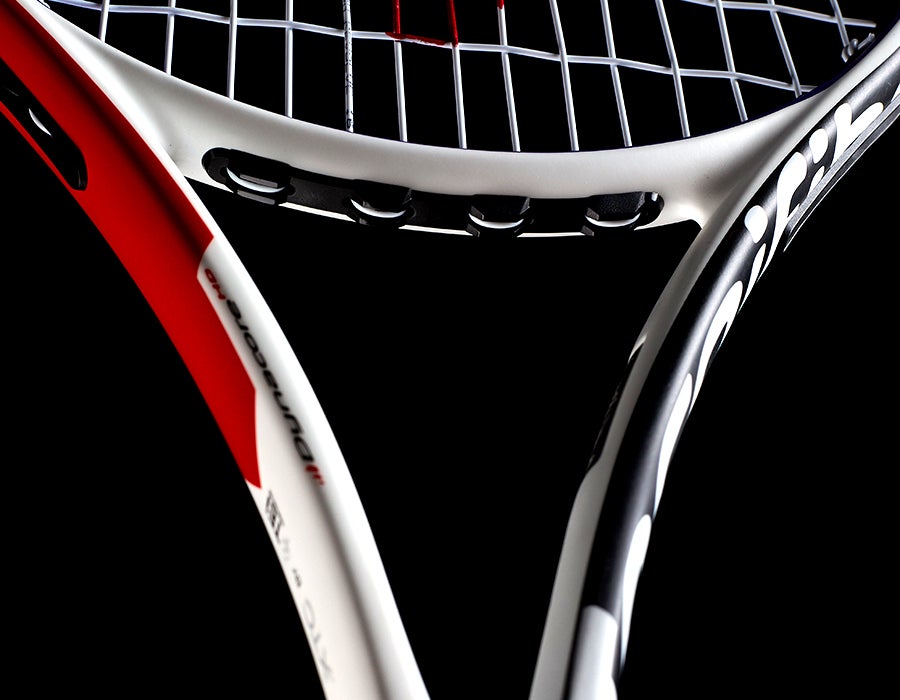
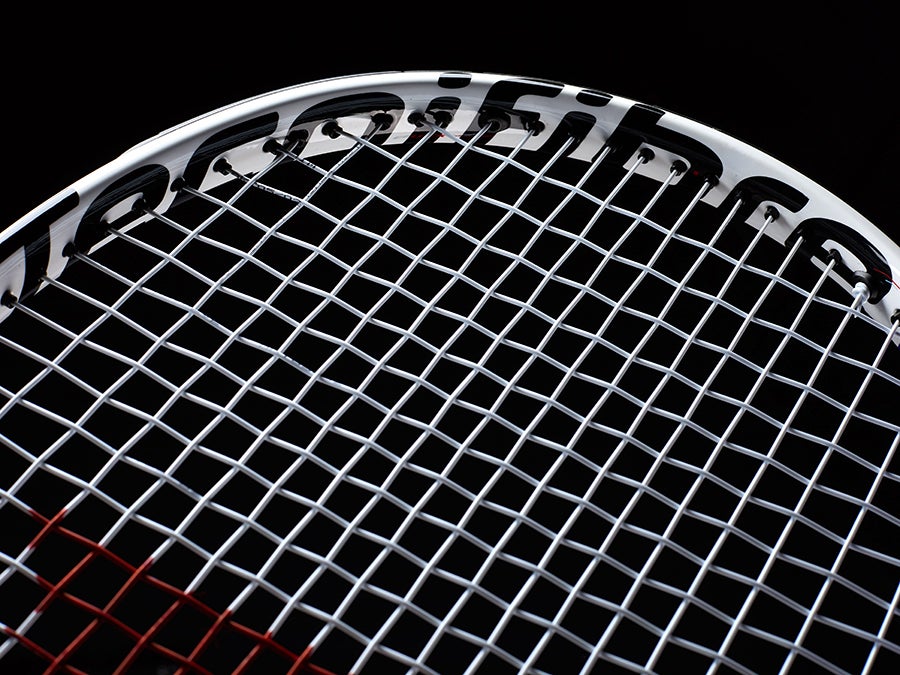
Stability, control and feel meld together nicely in the Tecnifibre ATP TFight 320 XTC. The updated Xtreme Touch Construction gives this version more flexibility and stability than its predecessor, the TFight DC 320. This 98-square-inch racquet also comes with a dense 18x19 string pattern and is built for precision. Even though this 320 XTC is the heaviest member of the TFight family, our playtesters found that it was surprisingly maneuverable and let them confidently redirect pace and hit their targets. Loaded with enough mass to make a dent on serves and returns, this racquet also helped our playtesters start points aggressively. The added flexibility and stability of this ATP TFight 320 XTC make it a good option for any intermediate to advanced ball striker who enjoys a racquet with a bit of heft to it.
Upsides
- Blend of power and control
Downsides
- Small sweetspot
Bottom Line
This racquet swings quickly for its weight and offers control with its tighter 18x19 string pattern.
Ability
Intermediate to advanced
Groundstrokes - Score: 80
When discussing the ATP TFight 320 XTC, our playtesters zeroed in on the racquet's control and feel from the baseline. Chris liked the blend of stability, control and feel he found with this racquet. He described, "The TFight 320 XTC had enough mass to drive nicely through the ball and not get pushed around. The response was crisp, so I felt connected to my shots. I was able to move the ball around well and enjoyed being aggressive with this racquet. However, when forced to play defensively, I found it less forgiving than the TFight XTC 305 or my TFlash 300 PS. The sweetspot wasn't as generous, and I was missing some of the bail-me-out-of-trouble power I get from those other racquets."
As with the previous Tecnifibre TFight DC 320, this update had pretty good control for Troy at the baseline. "When I took big swings with the 320 XTC I felt confident that I could keep the ball inside the court," he said. "I enjoyed dictating points and could control the depth of my shots with ease, which helped me move my opponent all over the court. I found the spin potential to be good considering the tighter 18x19 string pattern. I could easily dip the ball cross court and create some sharp angles. I found this racquet to have more power than a traditional player's racquet, such as the Volkl C10 Pro, but it wasn't quite as lively as a more modern player's racquet, like the Head Graphene Touch Radical Pro. The mass allowed for ample plow through and stability at contact. The downside was that the sweetspot felt smaller than it does in most 98-square-inch racquets; it felt more similar to a 95-square-inch racquet in this regard. If I made contact outside of the sweetspot I noticed a big drop in power, and the feel was a bit jarring. This racquet didn't feel ultra smooth or stable on contact, especially when compared to my Yonex VCORE Pro 97 (330) and Wilson Pro Staff RF97 Autograph."
"I playtested this racquet and the 305-gram version side by side, so it felt natural to compare the two racquets as the playtest progressed," said Michelle. "After my first hit with both racquets I was shocked to find myself gravitating to the lighter 305-gram option. I kept trying to test the racquets blindly (the cosmetics are so similar, this was easy to do), and I was shocked every time I finished a session and found that the 320-gram version was the racquet I left on the side of the court. I hoped for more from this racquet because I tend to gravitate toward heavier racquets, but the sweetspot felt small, and everything hit outside of the sweetspot felt erratic. I found myself slapping at the ball, and there wasn't enough weight in the hoop for me to hit a fluid shot. The racquet just didn't swing as effectively as the lighter version for me. I had hoped the point of distinction between this and the lighter version was going to be more plow through and more stability, but that wasn't the case. I also struggled because I wasn't really able to fit this racquet into a category. It isn't completely control oriented, but it isn't a power racquet either. It played somewhat erratically from the baseline. I don't have a lot of room for error when I hit, so this was a bit of an issue for me. On the positive side, the tighter 18x19 string pattern still offered decent access to spin, and the racquet swung relatively fast."
"I begin most of my tennis sessions playing mini-tennis inside the service boxes before transitioning to the baseline for full-court groundstrokes," said Mark. "Hitting groundstrokes close to the net gives me an idea of a racquet's level of maneuverability, and I get a feel for stability when I move to the baseline. I expect that an 11.9-ounce racquet with a mid-320 swingweight will offer plenty of stability, but I was pleasantly surprised that I could finesse Tecnifibre's new ATP TFight 320 XTC playing so close to the net. Although the racquet features a pretty dense 18x19 string pattern, developing a tight rotation on the ball was never an issue, and the ball's exit angle was not as low as many 18-main frames I have played. After about two hours of play I was able to consistently redirect pace and keep the ball deep to my opponent, which made me feel pretty effective from the baseline with this stick."
Volleys - Score: 78
At net, the TFight 320 XTC allowed our team to command the ball with relative ease. Troy described, "This racquet's response was very predictable when I made contact inside the sweetspot. I found the maneuverability to be quite easy considering the near 12-ounce strung weight, and there was ample stability to block balls back deep in the court. I didn't find the touch or feel of this racquet to be its strong suit, but I could still execute drop volleys effectively. As with my groundstrokes, the feel was somewhat dead whenever I made contact just outside the sweetspot, making it difficult to muster up a deep volley. The blend of control and maneuverability was great for doubles, though. Overall, I would have liked just a bit more stability and a slightly larger sweetspot."
The TFight 320 XTC performed adequately for Michelle at net. She offered, "I'm always comparing the stability of the racquets we're testing to my very stable racquet of choice, the Wilson Pro Staff RF 97 Autograph. Nothing is as stable for me as that racquet, so I naturally yearned for a bit more stability at net with this TFight 320 XTC. To me, the sweetspot just felt tiny, and the response was harsh whenever I made contact outside of the sweetspot. Maneuverability was a strength with this racquet, and swinging volleys seemed effective. I could ramp up the racquet speed and be aggressive when putting balls away."
Mark was surprised at how easy the ATP TFight 320 XTC was to get into place. He said, "This racquet offered a rewarding volleying experience. It felt stable against the heated passing shot."
"My favorite shot with this racquet was the volley," added Chris. "I loved the touch and feel I found on drop volleys and angles. Again, the racquet felt stable and comfortable. I found the response to be more forgiving at net, and I didn't have any issues finding consistent depth. There was ample mass to help me punch through hard-hit shots, and the racquet felt pretty solid when doing so."
Serves - Score: 78
With a solid blend of power and control, the ATP TFight 320 XTC impressed most of our team when it came to serves. "I didn't have any real complaints serving with this racquet, and I could execute most serves well," said Michelle. "However, playtesting two similar racquets can be tough, as one is always bound to stand out more. This TFight 320 XTC offered a good blend of power and precision, but it just wasn't as effective as the 305-gram version. I didn't feel like my serves stood out as a weapon when serving with this 320 version."
Mark played several sets of singles with the ATP TFight 320 XTC, and he found his serve to be somewhat hit or miss. He explained, "My serve normally benefits from heavier racquets, and this racquet's strung weight definitely qualifies. However, while its maneuverability complemented my groundstrokes and volleys, it did not quite translate to my serves."
Although Chris had to exert himself more to get the TFight 320 XTC moving compared to his racquet of choice, it was worth the effort. He described, "I had to work a little harder with this racquet, but I was rewarded with solid pace and consistency. My slice serve wide on the deuce court was working well, and I was able to put together some nice serve-and-volley combos off that serve. The weight of the racquet felt best when I was hitting flat or coming around the ball for slice. On topspin serves, this racquet lacked the maneuverability I get from my TFlash 300 PS, so some added effort was required to generate spin."
The ATP TFight 320 XTC helped Troy generate easy power and spin on his serves. He said, "I loved hitting heavy topspin and kick serves with this racquet. It was easy to flick my wrist and impart extra spin on my shots. The 18x19 string pattern allowed for plenty of control when I aimed near the lines. When I needed to unload on a flat first serve, this racquet provided a decent amount of pop. There was definitely less power here than in some other racquets we've recently playtested, but I still found my serves to be effective."
Returns - Score: 80
The maneuverability and control of the ATP TFight XTC 320 came together on returns for most of our playtesters. Mark felt dialed in with this racquet when returning. He said, "Typically, 11.9-ounce racquets are too much for me to do anything other than chip returns back into play, but with this racquet I was able to return serves with topspin more often than I have with any other racquet in recent memory. I can perhaps point to the 18x19 pattern and the tip-light balance to explain why I liked returning with it so much."
Chris noted, "I was able to knife my slice backhand nicely. The racquet also did well when redirecting pace. I was able to float block returns deep in singles to help neutralize the point against a big serve. When given more time, I found the racquet maneuverable enough to take a nice cut at the ball."
"The ATP TFight 320 XTC's maneuverable feel and decent control allowed me to be aggressive on my returns," said Troy. "Whenever I received a serve that was in my wheelhouse I felt confident taking an aggressive swing without worrying about the ball flying on me. The maneuverability came in handy whenever I was stretched out; I could easily flick the racquet and get the return back in play. If I needed to use my slice backhand return, I had enough control to place the ball deep in the court or away from the net player in doubles. However, when I tried returning high-speed serves the racquet felt a bit unstable. Compared to my Yonex VCORE Pro 97 (330), this 320 XTC didn't quite feel as solid on contact. When I made contact outside the sweetspot my returns landed short and the racquet felt jarring on my arms."
"Like my groundstroke experience, I caught myself slapping at way too many returns," said Michelle. "I just did not feel dialed in or connected to the ball. I ended up trying to focus on pulling my opponents off the court with an angle rather than attacking with a big shot off the return. This kept me from slapping the ball and still gave me an offensive edge when starting points. When I was stabbing at big first serves I would have benefited from more stability in the hoop of the racquet."
Overall - Score: 78
| Technical Specifications | ||
|---|---|---|
| Length | 27 in | 69 cm |
| Head Size | 98 sq in | 632 sq cm |
| Weight | 11.9 oz | 337 gm |
| Balance Point | 12.59 in 32 cm | 7 pts Head Light |
| Construction | 22.5mm / 22.5mm / 21.5mm | |
| Composition | Dynacore HD/Graphite | |
| String Pattern | 18 Mains / 19 Crosses | |
| Babolat RDC Ratings | ||
|---|---|---|
| Score | Grade | |
| Flex Rating | 68 | Range: 0-100 |
| Swing Weight | 326 | Range: 200-400 |
Scores
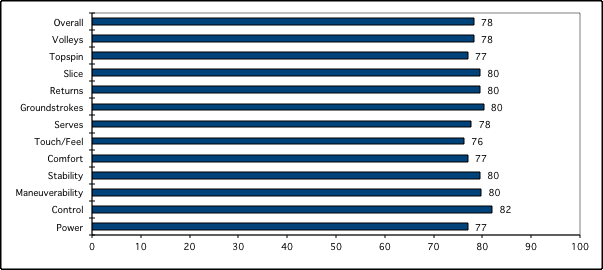
(Scores are determined by averaging individual play test scores)
| Chris' Scores | |||
|---|---|---|---|
| Power | 7.8 | Serves | 7.8 |
| Control | 8.1 | Groundstrokes | 8 |
| Maneuverability | 7.8 | Returns | 8.1 |
| Stability | 8.2 | Slice | 8.3 |
| Comfort | 8.3 | Topspin | 7.9 |
| Touch/Feel | 8 | Volleys | 8.3 |
| Overall | 8 | ||
| Troy's Scores | |||
|---|---|---|---|
| Power | 8 | Serves | 8 |
| Control | 8.3 | Groundstrokes | 8.3 |
| Maneuverability | 8.3 | Returns | 7.7 |
| Stability | 7.6 | Slice | 8 |
| Comfort | 7 | Topspin | 7.4 |
| Touch/Feel | 7 | Volleys | 7.5 |
| Overall | 7.8 | ||
| Michelle's Scores | |||
|---|---|---|---|
| Power | 7.5 | Serves | 7.8 |
| Control | 7.9 | Groundstrokes | 7.8 |
| Maneuverability | 7.8 | Returns | 7.5 |
| Stability | 7.5 | Slice | 7.5 |
| Comfort | 7 | Topspin | 7.5 |
| Touch/Feel | 7.5 | Volleys | 7.5 |
| Overall | 7.5 | ||
| Mark's Scores | |||
|---|---|---|---|
| Power | 7.5 | Serves | 7.5 |
| Control | 8.5 | Groundstrokes | 8 |
| Maneuverability | 8 | Returns | 8.5 |
| Stability | 8.5 | Slice | 8 |
| Comfort | 8.5 | Topspin | 8 |
| Touch/Feel | 8 | Volleys | 8 |
| Overall | 8 | ||
Playtester Profiles
Chris: 4.5 all-court player currently using the Tecnifibre TFlash 300 PS. Chris uses a full-western forehand grip, has a fast swing style and hits a one-handed backhand.
Troy: 4.5 lefty all-court player with a semi-western Forehand and a two-handed backhand. Troy currently plays with a Yonex VCORE Pro 97 (330).
Michelle: Open level baseline player with a semi-western forehand and a two handed backhand. She currently plays with the Wilson Pro Staff RF 97 Autograph.
Mark: 5.0 lefty all-court player with a one-handed backhand. He currently plays with the Prince Phantom Pro 93P.




Likes
Chris - "I like the ATP TFight 320 XTC's control, comfort, feel and solid response."
Troy - "There is a nice blend of power and control here. Weighing in at nearly 12 ounces strung, the ATP TFight 320 XTC feels fast and maneuverable."
Michelle - "This racquet performs nicely on serves. I can also carve out angles on groundstrokes and returns, which is effective."
Mark - "The prior TFight DC 320 aesthetic was easy on my eye, but the new, slightly more understated cosmetic is one that I favor even more. Performance-wise, these two racquets play very similarly, which made transitioning from one to the other almost seamless. Besides those aspects, I really like how versatile the 18x19 string pattern is for me."
Dislikes
Chris - "The ATP TFight 320 XTC's sweetspot feels small compared to my TFlash 300 PS and the new ATP TFight 305 XTC."
Troy - "This racquet's sweetspot feels undersized compared to most racquets with a 98 square-inch head. I'm not enamored with the touch and feel this racquet offers."
Michelle - "The sweetspot feels small. There isn't enough mass behind the ball, and the stringbed's response is a bit erratic for me."
Mark - "This is not so much a knock toward the ATP TFight 320 XTC as it is me noting that I am more familiar with frames that are either a little heavier (and not very stiff) or frames that are stiffer and lighter. I like playing with the ATP TFight 320 XTC quite a bit; there just are not too many similar frames available these days."
Comparing the racquet to others they've tried, our testers said:
Chris - "Advanced-level players seeking a comfortable racquet with nice feel and control should definitely give the ATP TFight 320 XTC a try. I'd demo this one against the new Volkl V-Feel 10 320, the Head Graphene Touch Prestige Pro and the Babolat Pure Strike VS Tour."
Troy - "I found the ATP TFight 320 XTC to feel pretty similar to the Tecnifibre TFight DC 320. This update had a bit better control when I made contact in the sweetspot. I would also compare the ATP TFight 320 XTC to the Head Graphene XT Speed Pro. I found some commonalities with the Prince Textreme Tour 100P as well, but this ATP TFight 320 XTC has a stiffer feel and a smaller sweetspot."
Michelle - "Nothing is coming to mind per se, as this TFight 320 XTC didn't really have a huge identity I could relate to or tap into. Based on specs, it is similar to a Pure Aero VS Tour, but I would have to admit that the Pure Aero feels more solid and stable in comparison."
Mark - "The ATP TFight 320 XTC reminds me of the Pro Kennex Ki 5 (320), along with the Babolat Pure Strike VS Tour and, to a lesser degree, the Head Graphene Touch Prestige MP."