Tecnifibre TFight 300 XTC Racquet Review
| Groundstrokes | 82 |
|---|---|
| Volleys | 83 |
| Serves | 80 |
| Returns | 84 |
| Power | 81 |
| Control | 81 |
| Maneuverability | 86 |
| Stability | 82 |
| Comfort | 80 |
| Touch/Feel | 83 |
| Topspin | 83 |
| Slice | 80 |
The new Tecnifibre TFight 300 XTC holds on to the control-oriented nature of the TFight line, but it updates the formula with XTC technology for added feel. Most notably, the TFight 300 XTC comes in with a higher swingweight, which gave it a level of stability usually reserved for heavier racquets. This stable response paired well with the racquet's easy mobility, allowing our playtesters to get creative with their games whether trading punches from the baseline or attacking the net. Our TW team didn't have many complaints, although the racquet's stiffness level wasn't universally loved. The TFight 300 XTC performed well from all areas of the court, and players who like to bring some variety to their point construction should take a good look at this racquet.
Upsides
- Stable for its weight
- Maneuverable
Downsides
- A touch on the stiff side
Bottom Line
This racquet blends maneuverability and stability, making it a versatile option for baseliners and all-court players alike.
Ability
Intermediate to advanced
Groundstrokes - Score: 82
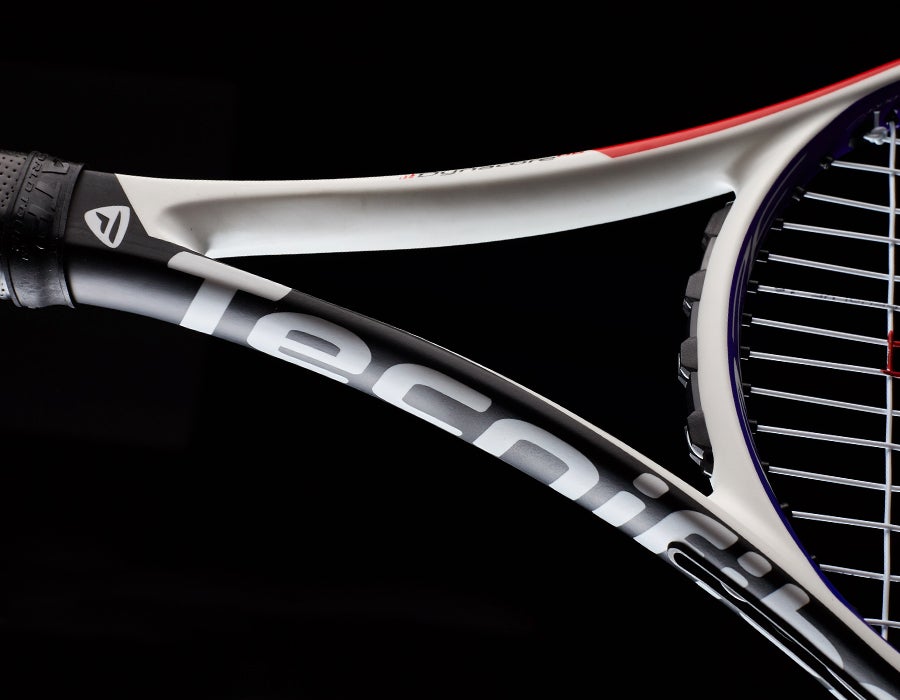
Although the TFight series is mainly built for control, this TFight 300 XTC aims to inject some power into the mix. For Tiffani, this racquet stacked up well to the competition. She explained, "The 300-gram spec is a very familiar one to me, so I found this TFight 300 XTC quite easy to pick up and use. This racquet swung fairly easily, although it didn't quite venture into 'whippy' territory. Access to spin and power was in line with other racquets in this weight range, but the TFight 300 XTC felt above average in terms of stability. I tested this racquet alongside the TFight 315 XTC, and despite the weight difference, the ease of use from the baseline was remarkably similar. I think the TFight 300 might be ever so slightly easier to use, but the main difference was feel. To make up for the drop in static weight, this racquet is stiffer than its TFight 315 counterpart. It felt comfortable enough, but it was noticeably stiffer than the heavier model."
New to the TW playtesting team, Erik put the TFight 300 XTC to the test with his all-court game. He recapped his thoughts, saying, "This racquet felt very lively on my groundstrokes, and I found I could generate a lot of topspin. My slice was staying low, but I felt like I could pop the ball high and deep if necessary. There was more power than control in this racquet on groundstrokes, and although the TFight 300 XTC was on the lighter side, it didn't get pushed around much. This racquet was extremely maneuverable; I could generate a ton of racquet head speed and get it into position whenever I needed, which worked very well with my game style. I could add tons of spin and slice effectively, which is always a plus in my book. Transitioning to the net was also fantastic with this racquet."
Although Sean typically enjoys heavier racquets, he found that the TFight 300 XTC encouraged him to get crafty. He noted, "Diverging from its 315-gram sibling, the 300 has a more even balance and a heftier swingweight. This spec suits my game better, and I felt it was more versatile off the ground. I couldn't get the same type of whippy spin and easy depth, but I was rewarded for my patience and creativity, which is my forte anyway. I felt that the racquet made great use of all 300 of its grams to provide excellent stability and feel, although the extra stiffness decreased the overall comfort."
The TFight 300 XTC's stability impressed Kristen. She said, "For a racquet with a strung weight of 11.2 ounces, the TFight 300 XTC felt quite stable. It had just enough mass behind it to let me swing out a bit more than I can with other racquets in this weight category. It was super maneuverable and offered effortless access to spin, allowing me to whip through the ball and generate some great angles. The main downside for me was the feel; this racquet felt very firm on contact. It played pretty evenly in feel across the stringbed, so I didn't find it to be quite as harsh as other racquets with the same weight and RA that we've tested lately, but I tend to gravitate toward racquets that have a plusher feel to them on contact."
Volleys - Score: 83
The TFight 300 XTC delivered on several fronts when it came to volleys. Volleying was a highlight of the playtest for Sean. He detailed, "The TFight 300 XTC's balance really showed its benefits at net, where the racquet blocked back pace effortlessly with great stability and feel. I wouldn't call it 'point and shoot,' but this racquet had above-average control, and its 321 swingweight felt plenty maneuverable."
Erik loves to attack the net, and he felt the TFight 300 XTC had a lot to offer on volleys. He said, "The TFight 300 XTC was extremely maneuverable at net. I could get the racquet to the ball on volleys without hesitation. The feel was extremely responsive, and I could hit effective volleys short or deep when needed. I found myself smacking shots across the court with a good amount of height because of the feel, and I could also angle off volleys and hit good spin when I wanted. I felt very connected to the ball."
On the flipside, Kristen didn't enjoy her time at net as much as Erik or Sean. She explained, "The racquet lacked a bit of control at times, and I had to concentrate more on my volley motion to keep the ball in the court. The firmness of the frame was very noticeable at net. I just wasn't getting quite the same touch on the ball as I did with the TFight 315."
"This TFight 300 XTC did everything as expected on volleys," Tiffani said. "It felt nimble around the net and was easy to get into position. My volleys were controlled when I struck within the sweetspot, and the racquet felt stable enough for the most part, but it felt a bit stiffer outside the sweetspot. The net is the one area where I felt the heavier TFight 315 XTC outplayed this lighter version. The TFight 315 XTC felt just as quick around the net but offered better feel and comfort."
Serves - Score: 80
The TFight 300 XTC helped our team serve with accuracy and allowed Erik to hit with variety. He described, "This racquet was very powerful on first serves; I felt like I could put a lot of heat on my shots without a lot of effort. I was also able to place my serves effectively in the box. I was very confident on second serves as well, and I found the racquet very predictable and comfortable. My favorite shot was the T serve on the ad side, and I enjoyed the slider out wide, too."
It took a while, but Kristen ended up having a good time serving with this racquet. She explained, "Initially, I just wasn't meshing with the TFight 300 XTC's feel. Over time, however, I adjusted to the feel, and this racquet became a lot of fun to serve with. As I was getting more dialed in I found I could really crank up the power and generate some heavy spin, allowing me to hit deep, well-placed serves."
Tiffani found serving to be a highlight of this playtest. She said, "I liked how easy it was to swing the TFight 300 XTC over my head. I was getting everything I expected from this racquet in terms of power and spin. Although I appreciated the extra weight of the TFight 315 XTC on serves, this 300-gram version was easier to get moving. Because of that, when a game got tight I preferred serving with this TFight 300 XTC because it just made it easier to get the ball to land inside the box."
While Sean didn't have any major problems with the TFight 300 XTC on serves, he didn't feel like it added much to his service game. He elaborated, "I didn't feel I was getting exceptional pace or spin on my serve, but I'm more of a spot server anyways, so this didn't bug me much. I would say that serving felt like the most lukewarm aspect of this playtest, but it's also probably the most lukewarm aspect of my game, so I don't feel right blaming my lack of free points entirely on the racquet."
Returns - Score: 84
The TFight 300 XTC's maneuverability and solid response made it a good returning racquet for our team. Kristen said, "I loved returning with the TFight 300 XTC. For an 11.2-ounce racquet, it played surprisingly well on returns. I found I could consistently set myself up in a good position to start the point. This racquet handled pace well; it had just enough plow through to generate a more powerful return, and it gave me great access to spin, which made it easy to send the ball back deep into the court."
Sean was also impressed. He said, "I really enjoyed the TFight 300 XTC's stability and maneuverability on returns. Anything above a mid-320s swingweight, and I start to feel like the racquet becomes cumbersome. The TFight 300 was right in my sweet zone: stable enough to handle the pace of serves but swift enough to get into position. I was comfortable going for my aggressive returns or just getting the ball back in play."
While Tiffani enjoyed returning with the TFight 300 XTC, she found that she had to add a little extra spin to get her shots to land in consistently. She explained, "This racquet performed well for me on returns. It was easy to maneuver, and I always had a good sense of where my shots were going to land. I did end up adding more spin to my returns than I normally do. That was partially because I had the time to and partially because my returns tended to fly a bit on me."
No matter what his opponent served up, the TFight 300 XTC gave Erik the tools he needed to stay on the offensive. He said, "On returns, I was able to be as aggressive with this TFight 300 as I wanted to be, especially against second serves. Whenever I was in trouble I could hit a deep slice and keep the point going in my favor. It was effortless to get the racquet around my body, and my contact with the ball always felt solid and meaty."
Overall - Score: 83
| Technical Specifications | ||
|---|---|---|
| Length | 27 in | 69 cm |
| Head Size | 98 sq in | 632 sq cm |
| Weight | 11.2 oz | 318 gm |
| Balance Point | 12.99 in 33 cm | 4pts Head Light |
| Construction | 22.5mm / 22.5mm / 21.5mm | |
| Composition | Dynacore HD/Graphite | |
| String Pattern | 16 Mains / 19 Crosses | |
| Babolat RDC Ratings | ||
|---|---|---|
| Score | Grade | |
| Flex Rating | 69 | Range: 0-100 |
| Swing Weight | 321 | Range: 200-400 |
Scores
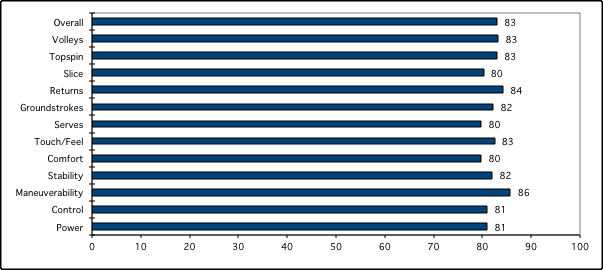
(Scores are determined by averaging individual play test scores)
| Tiffani's Scores | |||
|---|---|---|---|
| Power | 8.1 | Serves | 8.2 |
| Control | 8.1 | Groundstrokes | 8.3 |
| Maneuverability | 8.3 | Returns | 8 |
| Stability | 8.1 | Slice | 8 |
| Comfort | 8 | Topspin | 8.1 |
| Touch/Feel | 8 | Volleys | 8 |
| Overall | 8.1 | ||
| Sean's Scores | |||
|---|---|---|---|
| Power | 8 | Serves | 7.7 |
| Control | 8.3 | Groundstrokes | 8.6 |
| Maneuverability | 8.5 | Returns | 8.7 |
| Stability | 8.5 | Slice | 8.5 |
| Comfort | 7.2 | Topspin | 7.6 |
| Touch/Feel | 8.2 | Volleys | 8.5 |
| Overall | 8.5 | ||
| Kristen's Scores | |||
|---|---|---|---|
| Power | 8.3 | Serves | 8 |
| Control | 8 | Groundstrokes | 8 |
| Maneuverability | 8.8 | Returns | 8.5 |
| Stability | 7.9 | Slice | 7.6 |
| Comfort | 7.7 | Topspin | 8.8 |
| Touch/Feel | 7.8 | Volleys | 7.8 |
| Overall | 8 | ||
| Erik's Scores | |||
|---|---|---|---|
| Power | 8 | Serves | 8 |
| Control | 8 | Groundstrokes | 8 |
| Maneuverability | 8.7 | Returns | 8.5 |
| Stability | 8.3 | Slice | 8 |
| Comfort | 9 | Topspin | 8.7 |
| Touch/Feel | 9 | Volleys | 9 |
| Overall | 8.6 | ||
Playtester Profiles
Tiffani: 4.0 level baseliner with a semi-western grip on the forehand and hits a two-handed backhand. Currently playing with the Prince Textreme Tour 100P.
Erik: Open level all court player with a one-handed backhand and a western forehand. He is currently using the Yonex EZONE 98.
Sean: Open level counterpuncher with a semi-western forehand and a two-handed backhand. He currently plays with the Yonex VCORE Pro 97 (310).
Kristen: 5.0 level player with a semi-western forehand and a two handed backhand. Kristen currently plays with a Prince Phantom Pro 100.




Likes
Tiffani - "The TFight 300 XTC feels stable for this weight range, and its stringbed plays evenly. I like the cosmetic too."
Erik - "I like the touch, as well as all the spin and easy power."
Sean - "The blend of stability and maneuverability is superb for a racquet that weighs 300 grams."
Kristen - "The TFight 300 XTC is easy to swing and offers good stability for its weight."
Dislikes
Tiffani - "I don't have any real negatives. The TFight 300 XTC does things well, but there isn't anything truly outstanding."
Erik - "This racquet can be too powerful at times."
Sean - "As a personal preference, I like racquets with tighter stringbeds and slightly more weight. The TFight 300 XTC is also a bit stiff for me."
Kristen - "My main qualm is the feel; it's a bit too stiff for my tastes."
Comparing the racquet to others they've tried, our testers said:
Tiffani - "The TFight 300 XTC swung like many other racquets in its weight range, but it felt more stable. This racquet review did overlap some with the Yonex VCORE 100 (300), and the TFight 300 XTC felt more stable and more consistent in its response throughout the stringbed. With a higher swingweight in the TFight 300 XTC and a higher static weight in the TFight 315 XTC, I felt these two racquets had similar usability because I could switch between the two racquets fairly seamlessly. The TFight 315 feels slightly plusher, especially at net. I think the two TFight racquets are worth a side-by-side demo, because players who are usually looking at racquets in the low 11-ounce range might be surprised by how easy the heavier version is to swing."
Erik - "I think this TFight 300 XTC felt livelier than the Babolat Pure Strike VS. It also has more touch and a plusher feel, which is saying a lot. I prefer the TFight 300 XTC on serves and volleys because I can get more pace on my serve and can angle my volleys better. This racquet also doesn't get pushed around as much as the Pure Strike VS because of the swingweight. I would say the power was similar to a Babolat Pure Drive, but there's more touch and feel with this TFight."
Sean - "The TFight 300 XTC plays a lot differently than its TFight 315 counterpart; the TFight 300 XTC has a more even balance and comes in with a higher swingweight than the 315, and it doesn't have the same type of spin potential. The TFight 300 reminded me a lot of my 2015 Wilson Blade 18x20, but with a slightly lower swingweight and a more open pattern."
Kristen - "I tested the TFight 300 XTC side by side with the 315 model, and the 300 offered a firmer feel and slightly crisper response off the stringbed. Both racquets did have a lot of similarities in terms spin potential, maneuverability and access to power. I gravitated to the feel of the TFight 315 model because it felt closer to the feel of my current racquet of choice, but it's going to be a matter of each player's personal taste."